Good morning all, it’s Wednesday February 25. The inaugural Local News Day is coming up on April 9th and we’re brewing up a fun, collaborative and engaging idea to celebrate North Carolina’s vibrant news ecosystem.
First, what is Local News Day? It’s a national day of action designed to uplift and raise awareness about all the incredible local news and information providers across the country. You can sign up as a news organization, individual or business, nonprofit or government office that supports local news. National organizers are putting together all sorts of resources and assets to help you use the national day of action to grow your audience, including a toolkit and a series of trainings kicking off today to help you build momentum ahead of
April 9 (find links to register in today’s bulletin board).
What are we planning in NC? We know you are busy, but also eager to collaborate and connect with new people in your communities (and grow your email lists!). So, we came up with an idea that is low-lift, high impact and replicable all year-round.
☕ North Carolina News Cafes! On April 9th, we’ll gather in cities and towns stretching from Murphy to Manteo, inviting the public to grab a free cup of coffee (or other refreshment), meet local publishers and journalists and share input on the issues that matter most to them.
NC Local will be hosting NC News Cafes in Murphy, Asheville, Burlington, Durham, Sanford and Wilmington. If you’re an independent or a newsroom in those locations, we invite you to partner with us.
ISO: hosts in other locations! We’d love to see more NC News Cafes across the state to amplify our participatory and partnership-based approach to local news. What does it mean to host an NC News Cafe? Check out this info sheet and send me a note at catherine@nclocal.org if you have other questions. We’ll also distribute a planning toolkit and schedule a
meeting or two to make sure you have everything you need for a successful event.
📝 National Local News Day: Sign up here
📆 NC News Cafes: Sign up here by COB Friday 2/27
Join us in putting North Carolina front and center for Local News Day!
Coming up today:
Cities across North Carolina are seeing an increase in the number of people experiencing homelessness. We chat with a local reporter about how to cover this issue with a people-centered and trauma-informed approach.
Like an “IMDb or Wikipedia” for news creators, the Independent Journalism Atlas launches with 1000+ entries — but only 10 in NC! Learn how you can add yours or submit a nomination.
And, a longtime NC news leader announces a new chapter: “It's been a wonderful run.”
Glad you’re here, let’s get started.
|
|
|
|
|
‘No one's story is the same’
Covering homelessness with care, dignity and depth |
|
|
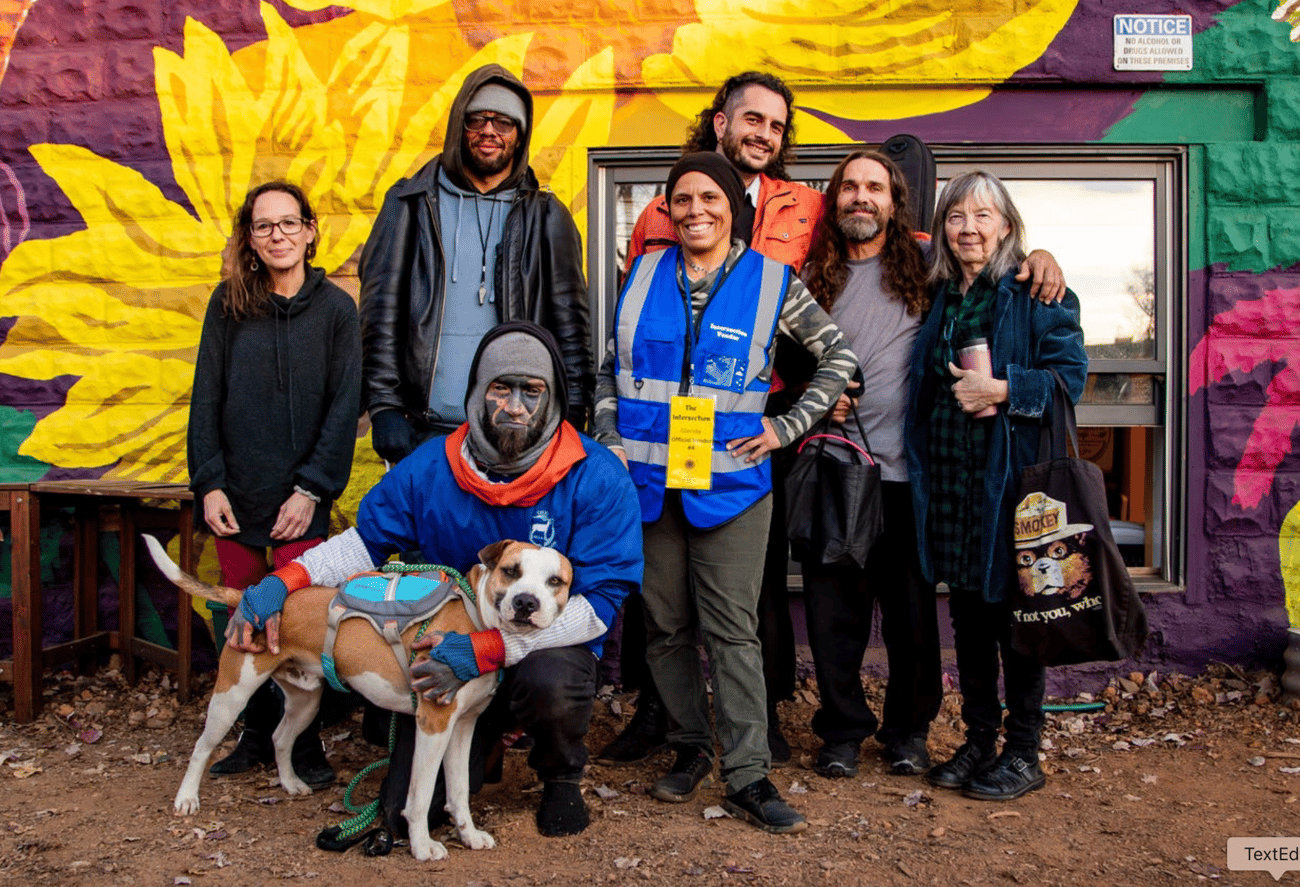
The staff of The Intersection newspaper outside of 12 Baskets Cafe in West Asheville on November 24, 2025. (Photo: Josh Bell/Asheville Citizen Times. |
When you read Sarah Honosky’s coverage of homelessness, a few things immediately stand out. The Asheville Citizen Times City Government Reporter makes a lot of intentional decisions about the words she uses, the personal details and quotes she includes and the way she centers her interviewees as having much fuller lives and experiences than their struggles and their housing status.
A recent example is a story she did on The Intersection, a community-produced street paper that began publishing last Fall. Through interviews with the publication’s writers, vendors and editors, Honosky shifts a common narrative from one that focuses on "pain and need" to one that captures the agency, contributions and dignity of people experiencing homelessness. And this extends to the accompanying
images shot by Citizen Times Photographer Josh Bell, including one showing a beaming Intersection contributor holding an edition of the Intersection and another of the proud team standing in front of a brightly painted mural.
Today, we chat with Sarah about how she approaches covering homelessness, some of the trauma-informed practices she uses and how she balances the human stories with examining systemic issues and policy responses.
What language choices do you make deliberately when covering homelessness? What else are you careful about to avoid reinforcing stereotypes?
Sarah Honosky: When describing an individual’s situation, I like to ask them what they prefer. Some people don’t identify with the term “homeless.” They might prefer “unhoused” or other language, altogether.
I wrote a few years ago about common myths that often surround homelessness. A homeless strategy specialist I interviewed said that among these is the narrative that mental health and addiction are the fundamental causes.
There’s a book by Gregg Colburn, “Homelessness is a Housing Problem,” that explores these ideas and found that regional variation in rates of homelessness can be explained by the costs and availability of housing, not by things like drug use, poverty or mental illness.
What are some trauma-informed approaches you use when interviewing people experiencing homelessness? How do you handle consent and privacy, especially when photographing or identifying vulnerable sources?
Sarah Honosky: Ahead of the recent point in time count, a single night census tallying the number of people experiencing homelessness in Asheville and Buncombe County, someone with lived experience addressed volunteers before they left to begin conducting surveys. She said her best advice was to talk to people on the street like you would anyone else.
If I’m spending time in a shelter, like our staff photographer Josh Bell and I did earlier this winter, we try not to get any shots where people could be identified without first getting permission from them.
With anyone who is in a vulnerable situation, I like to take more time explaining why I’m there and what I’m doing. I often confirm multiple times during the interview that they are comfortable and still OK to be talking to me for the story.
How do you balance systemic issues, policy proposals and the lived experience in your coverage of homelessness?
Sarah Honosky: When grappling with policy, it’s helpful to center the voices of people who stand to be impacted. When the city was considering expanding its panhandling ordinance (which it ultimately did) our public safety reporter Ryley Ober went to West Asheville and spoke with people panhandling about how they felt about proposed changes.
You recently did a story on The Intersection, a new community-produced street paper in Asheville. What have you learned about homelessness from reading the paper?
Sarah Honosky: Emily, who was on the street for two years in Asheville, wrote about her time “flying signs,” a common term for panhandling: What helped, what hurt and what it taught her. The paper offers a look at people’s unique experiences. Like that for Emily, signs became a way to “express and be seen” when she had otherwise lost her voice.
You’ve been covering homelessness for about four years. Do you have any stories you’re particularly proud of or that you heard made a big or small impact?
Sarah Honosky: I had several articles after Tropical Storm Helene I’m proud of: like the story of David, who was trapped under a bridge by rising waters; or a look at how the storm might impact the population as a whole.
Any other resources or recommendations for organizations covering housing and homelessness?
The Asheville-Buncombe Continuum of Care is the planning body responsible for developing and overseeing the community's response to homelessness. If people want to learn more about what is being done in Asheville, that might be a good place to start. Its meetings are open to the public.
Learn more about The Intersection and its supporting organization, Asheville Poverty Initiative and 12 Baskets Cafe. Thank you to Sarah Honosky for sharing these valuable insights and resources with us, and to Jacob Biba for tipping us off to Sarah’s story on The Intersection.
Additional Resources
➡️ Street Sense Media: A journalist’s guide to reporting on homelessness
➡️ ProPublica: Want to Report on Homelessness? Here’s What Our Sources Taught Us About Engaging Responsibly.
➡️ The Homelessness Beat Reporters Collective: Homelessness Reporting Guide
➡️ Invisible People Podcast:
Journalism, Homelessness, and Trauma
A Formerly Homeless Person’s Guide for Journalists Covering Homelessness
Better Reporting on Homelessness
|
|
|
|
|
|
|
|
Have you registered yet for the 2026 NC News & Information Summit March 27 at NC State? Tickets are just $100 and you won't want to miss this day-long gathering of 300+ news and information friends from across the state.
Co-presented by NC Local and the NC Open Government Coalition this year's keynote is: North Carolina's AI Crossroads: Innovation, Investigation, and the Public Interest.
Artificial intelligence is transforming news and information. For audiences, it’s reshaping how they find and access news. For journalists and civic information developers, it offers unprecedented tools for data analysis, accessibility, and content personalization. But AI also raises urgent questions.
Join Poynter's Alex Mahadevan, Inside Climate News Reporter Lisa Sorg, NC Central's Dr. Siobahn Day Grady and Code the Dream's Ricky Leung to explore how we harness AI's potential for news and information while addressing accountability challenges facing our profession, our state, and the communities we serve.
This keynote kicks off our annual gathering on March 27, 2026 followed by 25+ sessions and table talks (details coming soon).
|
|
|
|
|
|
📰 News about the news 📰
|
Longtime NC news leader announces a new chapter |
This week, McClatchy's Southeast Investigations Editor Cathy Clabby wraps up more than four years leading investigations at The News & Observer, The Charlotte Observer and across the organization. Clabby has coached reporters and edited numerous investigations including Power and Secrecy, Big Poultry, Security for Sale, Hopes Foreclosed and Private Eyes projects. Others examine the personal and financial cost of police misconduct, the severe risks disabled people face when complaints get ignored, how doctors with malpractice settlement track records continue practicing, how UNC School of the Arts failed to investigate faculty sexual abuse, and "curious actions" in Cary town hall.
“Countless situations in North Carolina need investigating, and readers really appreciate it when reporters dig deep,” said Clabby.
Clabby worked at McClatchy in North Carolina twice, including as a reporter from 1994-2007. She stepped into the role of investigations editor beginning in 2021.
“When I returned, I was shocked by how unresponsive local and state governments had become to the spirit and letter of North Carolina public records law. And how resistant they are -- with few exceptions -- to make the taxpayer-paid experts in their ranks available for interviews,” said Clabby. “News & Observer and Charlotte Observer investigative reporters showed me that you just can't let that stop you from getting to the truth. It's harder but if you stick with finding people who care about transparency and are willing to help, force the release of public records and get creative with sourcing (including data sourcing), you can fight your way to the facts. It takes time, but you will get there.”
What’s next for Cathy? She’s taking a much-deserved break but plans to continue supporting investigative journalism again in some capacity. Cathy’s last day with McClatchy is Friday.
|
The NC Media & Journalism Hall of Fame announces new inductees |
The UNC Hussman School of Journalism announced this year’s inductees to the NC Media & Journalism Hall of Fame, including ESPN broadcaster Jay Bilas, filmmaker Luchina Fisher and UNC Hussman professor Charlie Tuggle. “Dr. T” is recognized for launching the student newscast Carolina Week, overseeing the Media Hub capstone course and leading students as they covered the 2024 Paris Olympics and this year’s in Milan. Seth Effron is being honored for his long career in local
news and pioneering digital work, including launching the politics-focused Insider in 1993 and serving as executive editor of the N&O’s Nando. Curtis Media, which began with one radio station in Cherryville in 1967 and currently has dozens of others across the state, is also being recognized. It operates the North Carolina News Network (NCNN), the Triangle Traffic Network (TTN) and The Southern Farm Network (SFN) in addition to ACCSports.com.
|
New database maps independent news creators |
The Independent Journalism Atlas launched last week with 1000+ creators focusing on news and information. The project is a collaboration between Project C Founder Liz Kelly Nelson, Better Media Studios Principal Justin Bank and Audience Futurist Ryan Kellett. Like an “IMDb or Wikipedia for independents,” the Atlas lets you search by topic, platform and location. There’s also some dynamic ways to visualize the data, including a treemap, wheel and bubbles. It’s still a
prototype that the trio will be updating and adapting, including adding new data points, trust measures and verifications.
As of now, they’re including “independent, professional, missional, trusted, and ethical creators producing journalism broadly across reporting, analysis, opinion, curation, or explanatory.” Kellett wrote on LinkedIn that they’re erring on the side of inclusivity vs. traditional gatekeeping, but “even that methodology will likely change too as we grapple with how to fill in the space between capital-J Journalism and the wider way people get information on the internet today.”
Right now there are less than a dozen entries for the Tar Heel state. Know some North Carolina news creators who should be on this list? Submit yourself or others here.
The Independent Journalism Atlas is a larger project that is also working on standards and frameworks; licensing and partnerships; and revenue opportunities for creators.
|
|
|
|
Bulletin Board
|
Jobs |
📌 Staff Writer, The Courier-Times, Person County
📌 Raleigh Accountability Reporter, The News & Observer, Raleigh
📌 Western Wake County Reporter, The News & Observer, Wake County
📌 Transportation Reporter, The Charlotte Observer, Charlotte
📌 Dining, Retail and Culture Reporter and Government Reporter, The Fayetteville Observer
📌 Community Reporter, Beacon Media, Franklin & Granville Counties 💰
📌 Reporter, The Mountaineer, Waynesville
📌 Reporter, WFDD, Winston-Salem
📌 Weekend Host/Reporter, WUNC, Chapel Hill & Durham 💰
📌 Editor, QCity Metro, Charlotte 💰
📌 Director, North Carolina Local News Lab Fund, Remote in NC 💰
📌 Endowed Chair in Journalism and Public Policy, Duke-Sanford School of Public Policy, Durham
📌 Director of Development, IRE (Remote) 💰
📌 Fellowships Coordinator, The 19th (PT Contract, Remote) 💰
|
Opportunities, events & resources |
🌱 Reach beyond your newsroom’s bubble and biases: Earning trust across the political spectrum is about equipping diverse communities to grapple with shared problems together, relying on the same set of facts. It’s also about securing journalism’s relevance and financial future. With support from the Knight Foundation, Trusting News is offering a limited number of newsrooms free training, coaching and small group discussions to develop strategies and
take actionable steps to build trust with new audiences. Applications rolling until funds run out.
🌱 Rosalynn Carter Fellowships for Mental Health Journalism: This year-long, non-residential fellowships supports journalists working on a mental health topic of their choice. Fellows receive a $10,000 stipend, training, networking opportunities, and access to top experts and resources in mental health and journalism. Fellows are encouraged to select topics that are unique and creative. Projects may educate the public, raise awareness and inform other journalists in the field. Application deadline: April 3.
📅 Local News Day Trainings: The national team behind Local New Days has organized a series of trainings to help you maximize audience growth for the day of action and beyond. Sign up for Local News Day here to get updates, invites to weekly info sessions and access other resources.
Join the weekly info call this Friday:
When: Friday, Feb 27 at 1:30 PM ET
REGISTER HERE
Note: The registration link changes weekly, so we will share the new one in each update.
📅 Journalists Concerned about Criminalization Meetup. Interrupting Criminalization invites journalists and media makers concerned about criminalization–whether it affects your coverage, your workplace, or your community–to come together to better establish networks of mutual support, and share strategies for combating criminalization through media. We welcome movement journalists and those working in mainstream organizations, as well as activist media makers and communications workers, who face some of the same vulnerabilities and ethical issues as
journalists whether or not their work is recognized as journalism. March 5, 3:00-4:30 ET.
📅 2025 RJI Fellows Showcase: Join a virtual public presentation where RJI Fellows will demo what they built and show you how to use it. All resources are built to be free, accessible and easy to use. March 5, Noon ET. Projects include:
Tools and a guidebook for newsrooms interested in embracing non-traditional newsroom models and methods
A one-stop platform that helps U.S. newsrooms and journalists find money for reporting and journalism projects
A platform that provides journalists with ready-made materials and resources for immediate use for covering immigration
A digital guidebook to help newsrooms engage in walking tours as a medium for engagement and revenue building for local journalism
|
|
|
|
That's it for today, thank you for reading. Got an idea for this newsletter or feedback to share? Please send me a note to catherine@nclocal.org. As always, know you are appreciated for all you do to support the North Carolina local news and information ecosystem. —Catherine
|
|
|
|
|