Share

Just kidding, we have a policy against that!
 β€Œ β€Œ β€Œ β€Œ β€Œ β€Œ β€Œ β€Œ β€Œ β€Œ β€Œ β€Œ β€Œ β€Œ β€Œ β€Œ β€Œ β€Œ β€Œ β€Œ β€Œ β€Œ β€Œ β€Œ β€Œ β€Œ β€Œ β€Œ β€Œ β€Œ β€Œ β€Œ β€Œ β€Œ β€Œ β€Œ β€Œ β€Œ β€Œ β€Œ β€Œ β€Œ β€Œ β€Œ β€Œ β€Œ β€Œ β€Œ β€Œ β€Œ β€Œ β€Œ β€Œ β€Œ β€Œ β€Œ β€Œ β€Œ β€Œ β€Œ β€Œ β€Œ β€Œ β€Œ β€Œ β€Œ β€Œ β€Œ β€Œ β€Œ β€Œ β€Œ β€Œ β€Œ β€Œ β€Œ β€Œ β€Œ β€Œ β€Œ β€Œ β€Œ β€Œ β€Œ β€Œ β€Œ β€Œ β€Œ β€Œ β€Œ β€Œ β€Œ β€Œ β€Œ β€Œ β€Œ β€Œ β€Œ β€Œ β€Œ β€Œ β€Œ β€Œ β€Œ β€Œ β€Œ β€Œ β€Œ β€Œ β€Œ β€Œ β€Œ β€Œ β€Œ β€Œ β€Œ β€Œ β€Œ β€Œ β€Œ β€Œ β€Œ β€Œ β€Œ β€Œ β€Œ

View in your browser

Did someone forward you this email?

πŸ‘‹Sign up here!

Follow the trail to the issues, conversations and information connecting the region.


Dear reader,


Late last week, I made the trek from Sylva to Raleigh to join my fellow journalists from across the state at the NC Local News and Information Summit. It is an annual event that we at NC Local co-host with NC Open Government Coalition. It's always great to connect with other reporters from all corners of the state. In some ways, the Summit is like a big family reunion ... if your family reunion discussions center around how to run a good investigation, the benefits and threats of AI and the importance of Spanish language journalism.

This year's keynote centered on AI use in local news. The panelists highlighted how AI has increased issues with misinformation and media literacy, while also having inherent flaws like bias and other issues. 


The panelists agreed that newsrooms and other industries can use AI to improve workflows, efficiency and do tasks that people don’t want to do. 

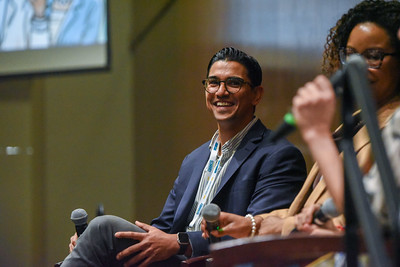
Alex Mahadevan on the Summit's keynote panel (Photo by Tommy Kopetskie/Elon)

Keynote speaker Alex Mahadevan of Poynter repeated a common point of AI discussion. 


β€œWe want A.I. to do our laundry, not create our art,” said Mahadevan.  


While some AI use can be helpful, it’s important that journalists, especially, are clear about when AI is being used. NC Local has an AI use policy alongside our other editorial guidelines. In short, we do not use AI to write. (Here’s a guide by Poynter if you want to see the industry standard.)  


β€œNC Local is a human-driven organization. If we choose to use AI, or artificial intelligence, we do so only to supplement the work of our journalists,” the policy states. β€œWe do not publish unedited AI-generated text, and we do not use AI for visuals.” Most importantly, we are transparent about the ways we sometimes use AI (analyzing data and organizing spreadsheets, for example). 

Also at the summit, I led a panel of local reporters talking about the complexities β€” and the fun β€” of living where we work. 


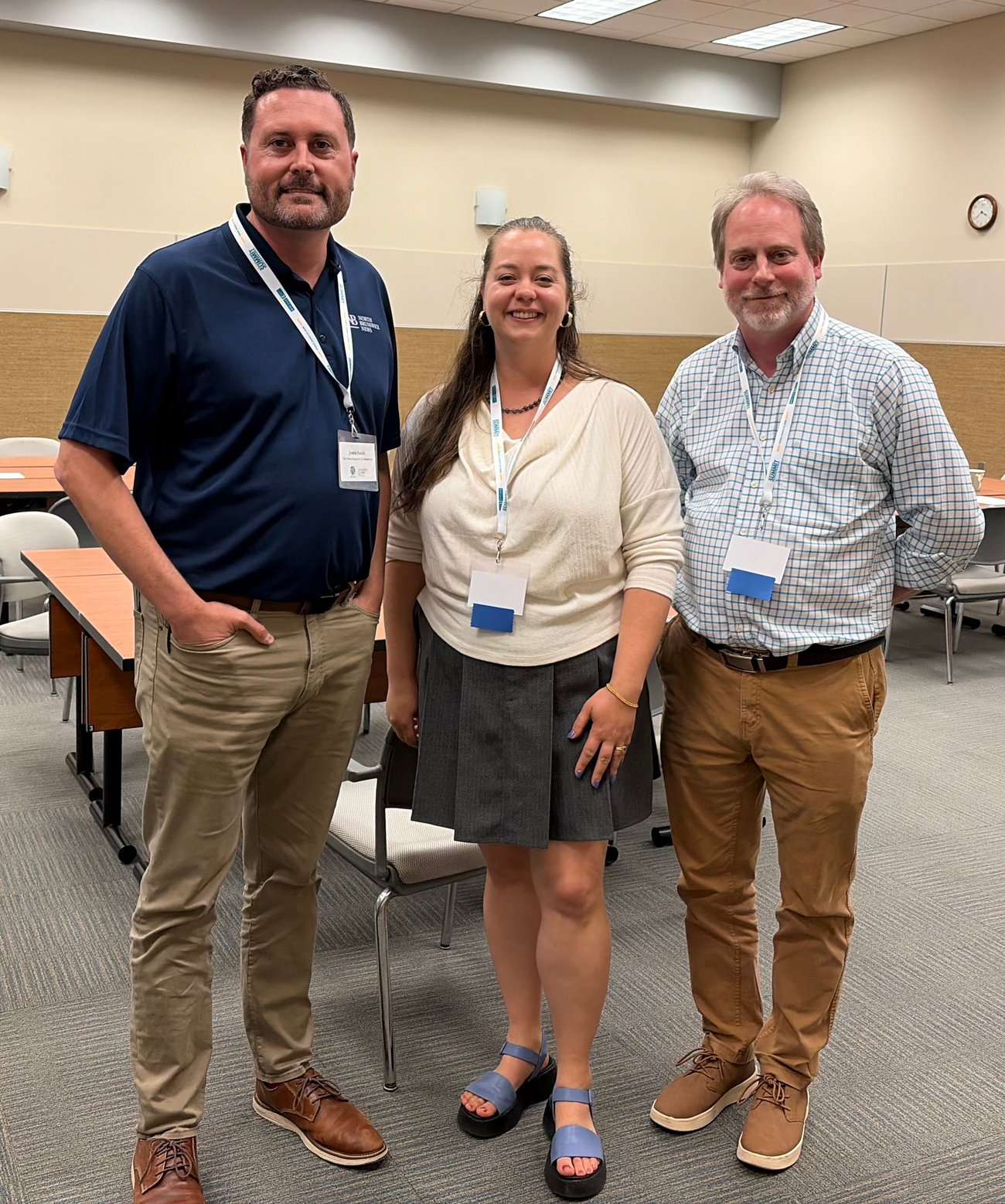
The News Reporter publisher Justin Smith (left) from Whiteville joined me with longtime CityView reporter Paul Woolverton from Fayetteville to share β€œsmall world” stories about what it’s like reporting in our hometowns. That’s something AI can never replicate.  


Want to chat with me and other journalists about AI and whatever else is on your mind? 


Join us at one of our Local News Day celebrations on April 9. I’ll be in Sylva and Murphy along with other reporters from the region. There are also celebration in Asheville and Waynesville. Come on out and have a cup of coffee on us!

Happy trails! 


Lilly Knoepp

Senior Western NC Reporter


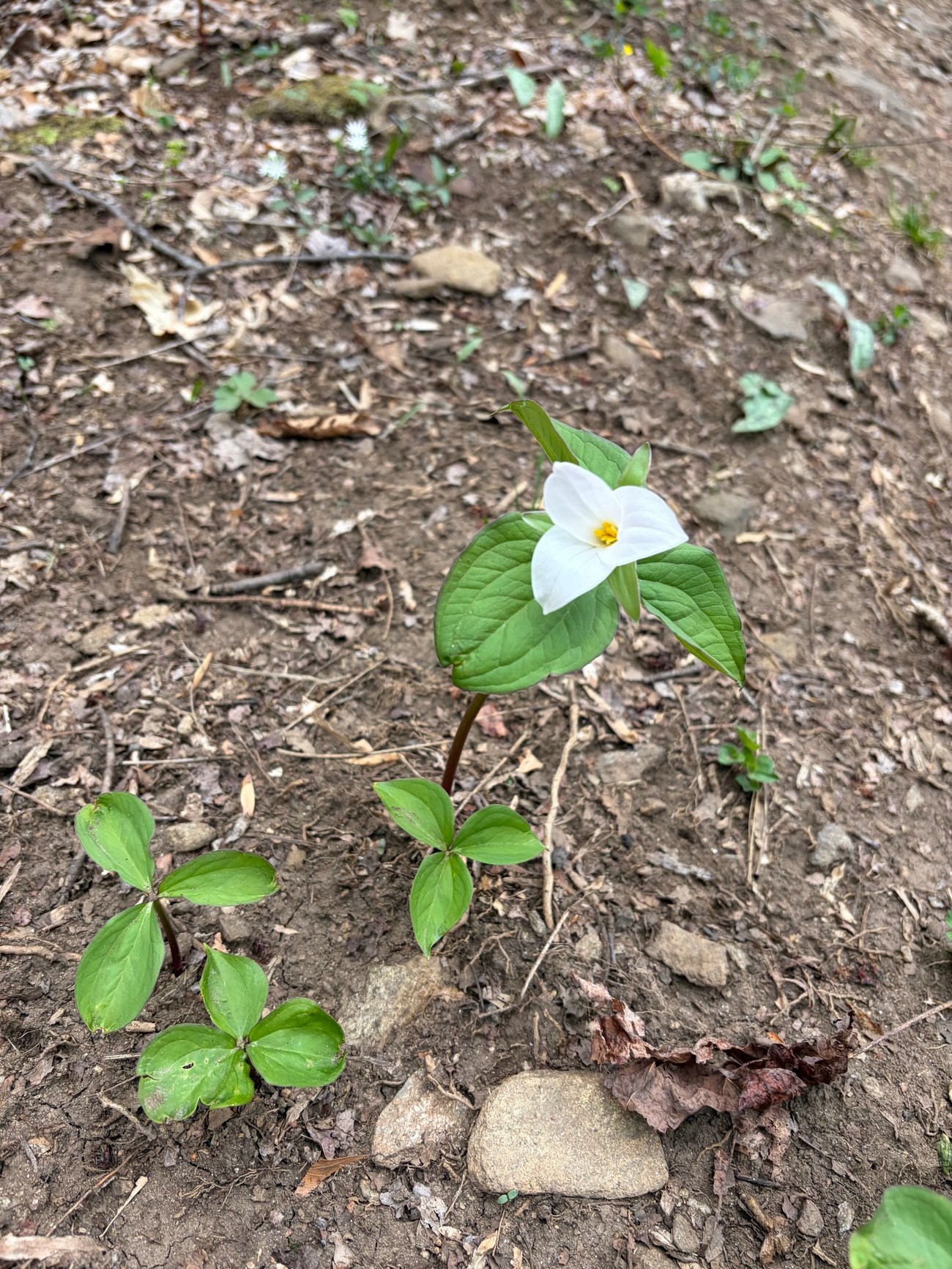
P.S. Remember how I showed you that first trillium bud last week? Well, it's a flower now! 🌱

First-of-its kind sheriff removal hearing plays out in Graham County

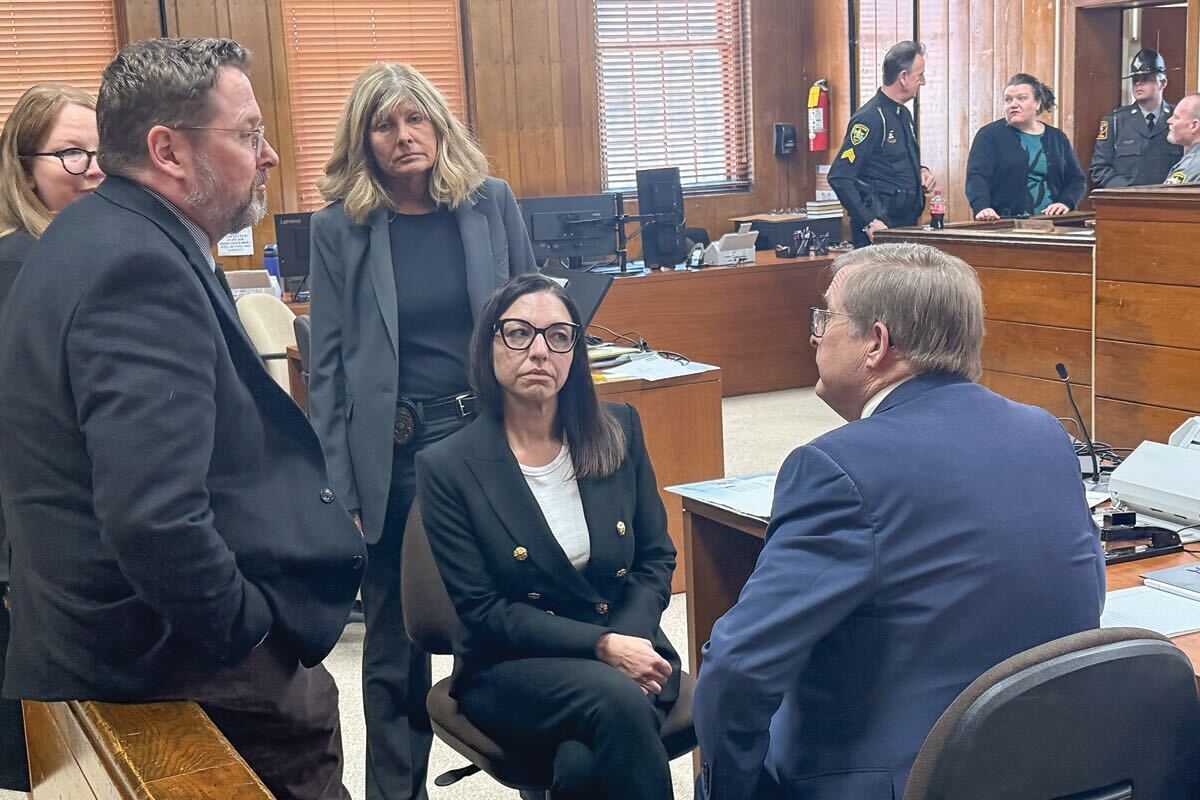
District Attorney Ashley Welch speaks with members of her staff. Photo by Kyle Perrotti /SMN

Suspended Graham County Sheriff Brad Hoxit was in court for four days last week. While he is the third sheriff who District Attorney Ashley Welch of the 34th district has petitioned for removal in the last nine months, this is the only case, so far, to go to trial. 


Welch petitioned for Swain County Sheriff Curtis Cochran to be removed in June 2025, and he subsequently retired. Cochran is still facing federal and tribal charges. Cherokee County Sheriff Dustin Smith was asked to step down in February 2026 and complied.  


Under North Carolina law, an elected sheriff can be suspended and then removed only through a judicial process. The first step in the process is for a district attorney or county attorney or at least five voting residents in the county to file a petition to the court, we reported.   


In January, Hoxit was suspended from office following Welch’s request for removal based on allegations of abuse of power and misconduct. In Welch’s petition to remove Hoxit from office, she described Hoxit as having a β€œnever ceasing obsession surrounding  [Graham County Commissioner] Jacob Nelms.” 


Nelms was being investigated by the Graham Sheriff's office and ultimately by the state Department of Insurance for allegations of fraud but has not been charged.    


In her complaint filed against Hoxit, Welch wrote: β€œUnchecked power can be dangerous. In this case, [Hoxit] has used the power of his office to obtain search warrants, asked officers under his employ to fabricate evidence against a citizen, and spent numerous resources to target an individual who is the ex-husband of one of [Hoxit’s] romantic interests.”


Smoky Mountain News Editor Kyle Perrotti attended the Hoxit trial, and I talked with him about it. Our conversation was edited for brevity and clarity.


Knoepp: What are the district attorney’s accusations against Hoxit? 


Perrotti: One was that he abused the power of his office in the course of an investigation into sitting Graham County Commissioner Jacob Nelms. 


Now, there's a conflict because when the Graham County Sheriff's office began this investigation, then-Sheriff Brad Hoxit, who was having his removal heard, was in a relationship with Adrian Nelms, Jacob Nelms' then-wife. The Nelms divorced, and since then, Hoxit married Adrian Nelms. (Note: According to legal filings, Hoxit and Adrian Nelms have since divorced).


So the argument was that he concealed this conflict from the district attorney's office, and even other state investigators working the case, and abused his power to do things like get a tracker warrant for Nelms's vehicles and a data dump on his cell phone. 


The other two claims [in the trial] were somewhat tangential. One was that in a conversation with his chief deputy, he wouldn't let the deputy get out of the vehicle, even though the deputy said he was uncomfortable and wanted to be taken home, and it was not kidnapping, but basically just saying that he was holding his chief deputy, Cody George against his will. 


And then the third claim was that he'd extorted one of his employees, in the course of the investigation, he'd allegedly had her make up a fake email address, like a burner email, to obtain county records regarding Jacob Nomes. And then he told her, allegedly, that if she told anyone about it, that she'd never work in law enforcement again. 


Knoepp: How did they move through these claims during the trial?


Perrotti: The removal hearing is technically neither a civil nor criminal trial, it's basically an administrative hearing, but it played out exactly like a criminal trial, minus a jury. Ashley Welch, the district attorney, represented the state, arguing for Hoixt's removal. And then there were defense attorneys representing Hoxit. The state put its case forward first, called its witnesses, presented its evidence and then the defense. There were opening and closing arguments. 


Knoepp: You sat in the courtroom for four days. What was the mood? 


Perrotti: There was a curiously large law enforcement presence. The first day, there were a lot of attorneys on hand representing different interests, and a lot of them had remarked that they'd never seen that kind of security presence. They were fully armed with long guns and wearing tactical armor. The Cherokee Indian Police Department (CIPD) SWAT team was on hand. Law enforcement was staged down below the courthouse, and there was actually a command center set up off site that had law enforcement from several surrounding counties. Ashley Welch, the district attorney, at the beginning of each day, at the end of each day, and then for lunch, was escorted in an up armored SUV with two law enforcement vehicles in front and two behind. There were multiple state troopers in the back of the courthouse, where the judge's office and district attorney's offices are.


Note: Perrotti added that he confirmed that a credible threat was the cause of the increased law enforcement presence. 


Knoepp: Was there any testimony that stood out to you?  


Perrotti: There was audio of a meeting that was actually secretly recorded by Ashley Welch's staff between her and Hoxit, where DA Welsh asked why it was that Hoxit wasn't forthcoming with the conflict, and he said that his attorney, David Wijewickrama [former Graham County Sheriff’s Office attorney], told him not to worry about it. 


Well, on the stand, Wijewickrama ... refuted Hoxit's claims, saying that he didn't know of the conflict and that as soon as he did, he resigned. 


Knoepp: I know these removal hearings are uncommon, but right now in Western North Carolina with District Attorney Welch, this is the third petition for removal she's filed in the last eight months. Was that brought up at all by the defense?


Perrotti: That wasn't brought up by the defense, but it was kind of an undertone throughout the whole thing. You know, the other sheriffs, Cochran and Smith, are both Republicans, same party as Welch. Hoxit is unaffiliated, but I think he's known as a more conservative sheriff who, in my research, pulled Republican ballots the last 10 years. So it's, in a sense, politically tough for her, but even more so just because of the instability it introduces to her prosecutorial district.


I think she feels like she has to do it because if a sheriff is able to basically undermine the power of the district attorney's office, then it removes that check and balance from the whole system and could compromise the integrity of the whole justice system. 


Welch’s argument was that even the sheriff, the most powerful person in a given county, can be subject to accountability. 


The judge’s decision on the trial is expected in the next few weeks.


Celebrate the first-ever Local News Day! 

On April 9, join us for the first-ever Local News Day. Newsrooms across North Carolina are hosting NC News Cafes, where you can:


πŸ‘‹ Meet local journalists

πŸ’¬ Share what issues matter most to you

β˜• Connect over a free cup of coffee

These events are happening in communities across the state, hosted by local newsrooms in partnership with one another. 

NC Local is partnering with several Western North Carolina media outlets to celebrate Local News Day. 


Come out to City Lights Cafe (3 E Jackson St) in Sylva from 8:30 to 10:30 a.m. to have coffee with local reporters from NC Local, The Sylva Herald and the Smoky Mountain News. RSVP here. 


Or join us in Murphy at Crafted Dough (104 Tennessee St, Suite B) from 11 a.m. to 1 p.m. with staff from The Cherokee Scout, WKRK, Local TV 4, and WCNG-WCVP. Enjoy a free cup of coffee and talk about local news.


In Asheville, Ashevegas, Asheville Watchdog, Beacon Tribune, Enlace Latino NC, Mountain Express will be at Resurrection Studios Collective
(160 Broadway St) from 10a.m. to noon. 


In Waynesville, The Mountaineer is also planning to celebrate Local News Day on April 13 from 3 to 5 p.m. at the Main Street Diner. 


Helene blowdown fuel fires in WNC

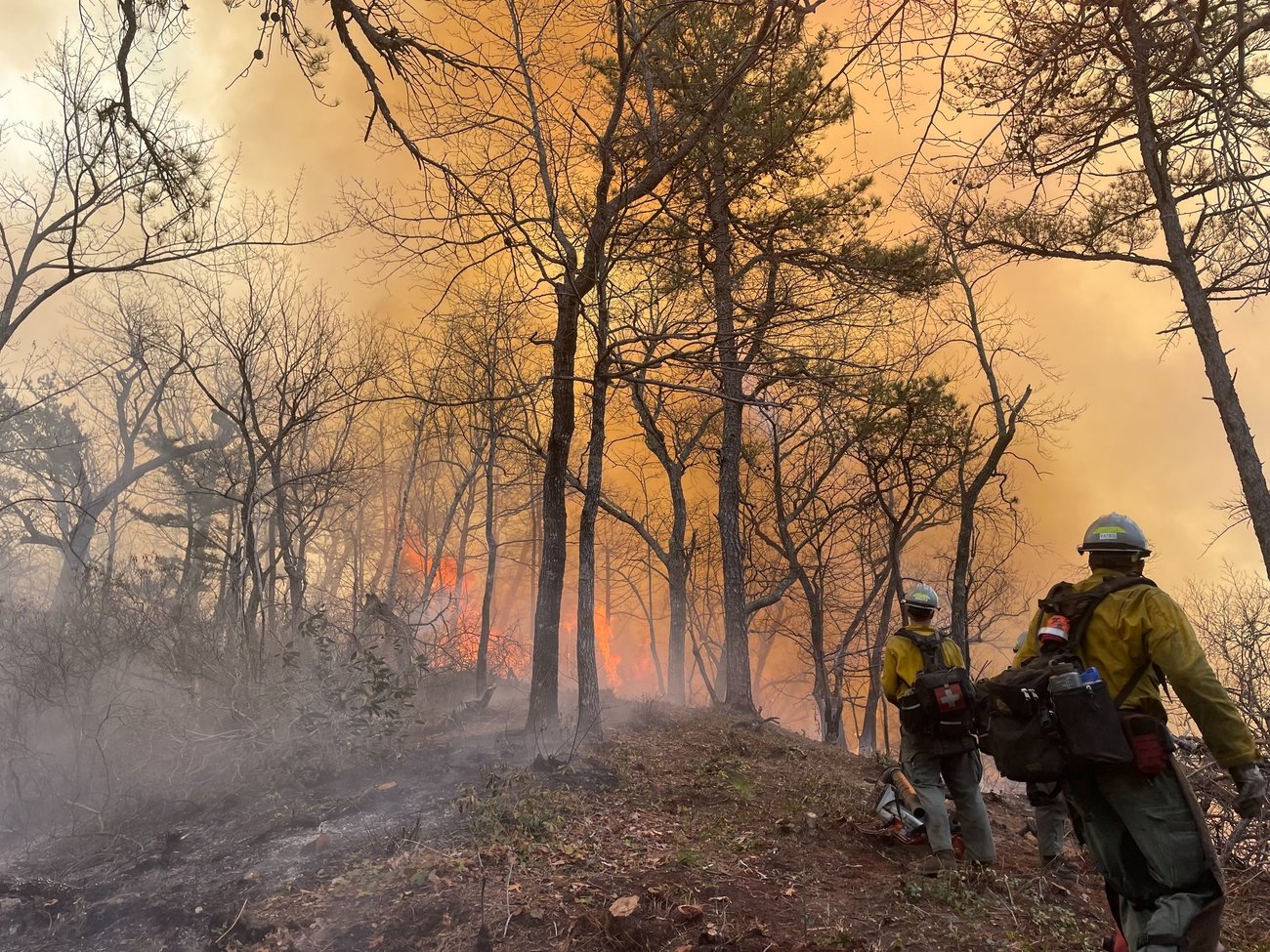
U.S. Forest Service fighting the Jumping Branch Fire in McDowell County (Photo by Lisa Jennings) 


The state has been under a burn ban since the weekend. Wildfires have been starting regularly due to the conditions, lightning and human error. The cause of many of the fires is still under investigation. 


In McDowell County this week, a woman has been charged with starting a wildfire after she admitted that she flicked hot ash from a cigar she was smoking into a wooded bank. The fire then spread to private and U.S. Forest Service lands and has burned more than 275 acres.

On Wednesday morning, the Jumping Branch fire was 50% contained. The fire is just 8 miles north of the town of Marion.  


In Mitchell County, the Poplar fire is almost completely contained. The fire burned about 370 acres, and some of that was on the western edge of over 600 acres that were hit hard by Hurricane Helene. 


β€œI’ll be honest, if you haven’t been out there, it’s pretty shocking,” Jen Bunty, disaster assistance recovery team member for the U.S. Forest Service in the National Forests in North Carolina, said on Monday. 


This made it more difficult to fight the fire, Bunty explained. 


β€œIt’s really hard due to the access limitation. It’s hard even to get heavy equipment in there to make fire lines," she said. "Luckily, there were no structures lost, and no one was hurt.” 


She said you could see driveways where the fire burned the area on both sides, but the U.S. Forest Service has been working to remove fuel in high-hazard areas. 


β€œWe just want people to be aware that there is an increased fire risk. The safety steps are even more important now, and maybe even looking into some of the fire-wise principles could start helping people to deal with this,” she advised. 


The Forest Service is planning to use helicopters and other methods to remove the trees in the Mitchell County area to reduce the hazard. 


In Avery and Wilkes counties, firefighters battled brush fires over the weekend, according to The Watugua Democrat.


Calling all πŸ“–πŸͺ±  bookworms!

Photo by Ed Robertson/Unsplash

Book lovers will gather from across the region next week for Western Carolina University's annual Spring Literary Festival.


The free festival takes place April 6-9 at the A. K. Hinds University Center and the John W. Bardo Fine and Performing Arts Center at WCU. Attendees can hear from a wide range of writers, including Ross Gay, Vanessa Lillie, Deborah Jackson Taffa and Joy Priest. Find the full schedule here.


My open tabs


  • Stein asks NC lawmakers for $792M more in new Helene recovery funding (WRAL

  • With stricter laws across the Southeast, NC remains an access point for abortion care (NC Health News

  • Flock of lame ducks at NC legislature could upend short session dynamics (NC Newsline

  • Swain County Commissioners held a public hearing to consider a data center moratorium Commissioners will vote on the issue at their April meeting (Swain County Commissioners meeting)

  • Town moratorium prevents construction of data centers in Boone for a year (The Appalachian)

  • Who will fill the power vacuum at the top of the North Carolina Senate? Watch the short session. (NC Newsline

  • Changes to NC policies and laws could reduce hiring of β€˜wandering officers’ (Carolina Public Press

  • New Cherokee County Commissioners Sworn-In The Cherokee County Board of Commissioners held special meetings earlier this week to appoint and swear in the new commissioners: Sue Lynn Ledford and Jeana Conley, who were chosen by the Cherokee County GOP last week after the resignations of Dan Eichenbaum and Cal Stiles. (WKRK

  • A WNC ground station is back in business for NASA's Artemis II (Blue Ridge Public Radio

  • Q&A: NC's prison system is struggling to pay its bills and keep a safe staffing level (WUNC

  • Disconnections among Duke Energy Carolinas customers doubled in February (WFAE

  • Town moratorium prevents construction of data centers in Boone for a year (The Appalachian

  • Gov. Josh Stein ordered all U.S. and North Carolina flags at state facilities to be lowered to half-staff from sunrise to sunset on Saturday, April 4, in honor of state Rep. Mike Clampitt (R-Swain), who died in March after a long battle with cancer. (NC Department of Administration

Support Local Journalism Across NC

Every contribution helps NC Local provide accurate and independent

news and information.  

I'll donate today!

My Favorite Trail: 

Kyle Perrotti is the News Editor at The Smoky Mountain News

Welcome to a regular feature of The Trailhead: My Favorite Trail. Each installment will feature a WNC trail. This week, Kyle shared his favorite spot. Want to share your favorite trail for a future newsletter? Email me! 


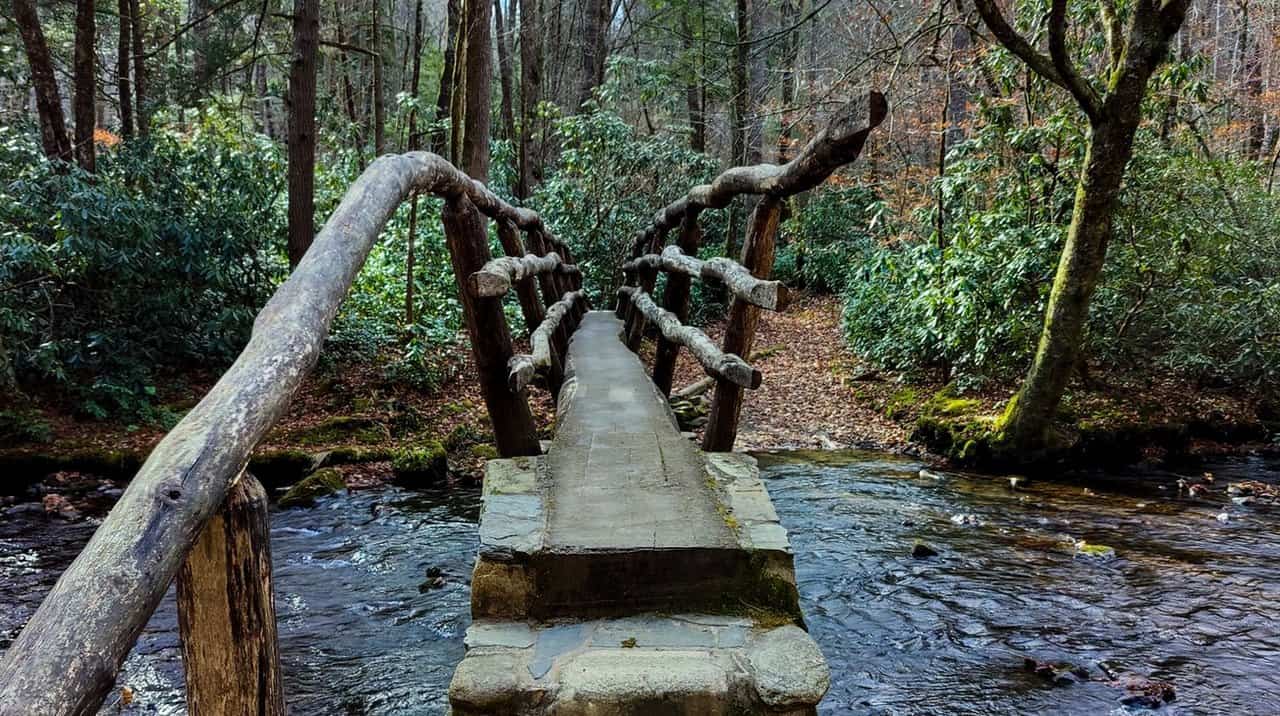
Kyle says many of the bridges like this one washed out during Hurricane Helene. (Photo courtesy of Haywood County Tourism and Development Authority)  

His favorite trail: Boogeyman Trail 


The trail is a 7.6-mile loop in the Cataloochee Valley that is part of the Great Smoky Mountains National Park. Kyle recommends the trail because it’s secluded, but unfortunately, it was hit hard by Hurricane Helene and remains closed. 


The trail crosses a creek a number of times, and around 2020, the footbridges were washed out and then replaced before Helene. During the storm, Kyle says the valley flooded again. 


β€œThe way the valley is, it opens up pretty broadly at the deeper end of the valley. And that whole area was flooded, and there are little creeks that go through there. There's quite a bit of elevation gain at points on the Boogerman Trail from the trailhead for about a mile in and out; it was pretty flat so that whole area got flooded pretty badly,” he said. 


The trail also passes through the former Palmer farmstead where Kyle says you could still see a stonewall and some other farmstead as well as a stand of hemlocks.


β€œAnd it's rare. You know, most of the hemlocks were wiped out by the woolly algeid, and those hemlocks are still standing proud, and they're only, they're some of the only ones you can see in the park,” Kyle said. 


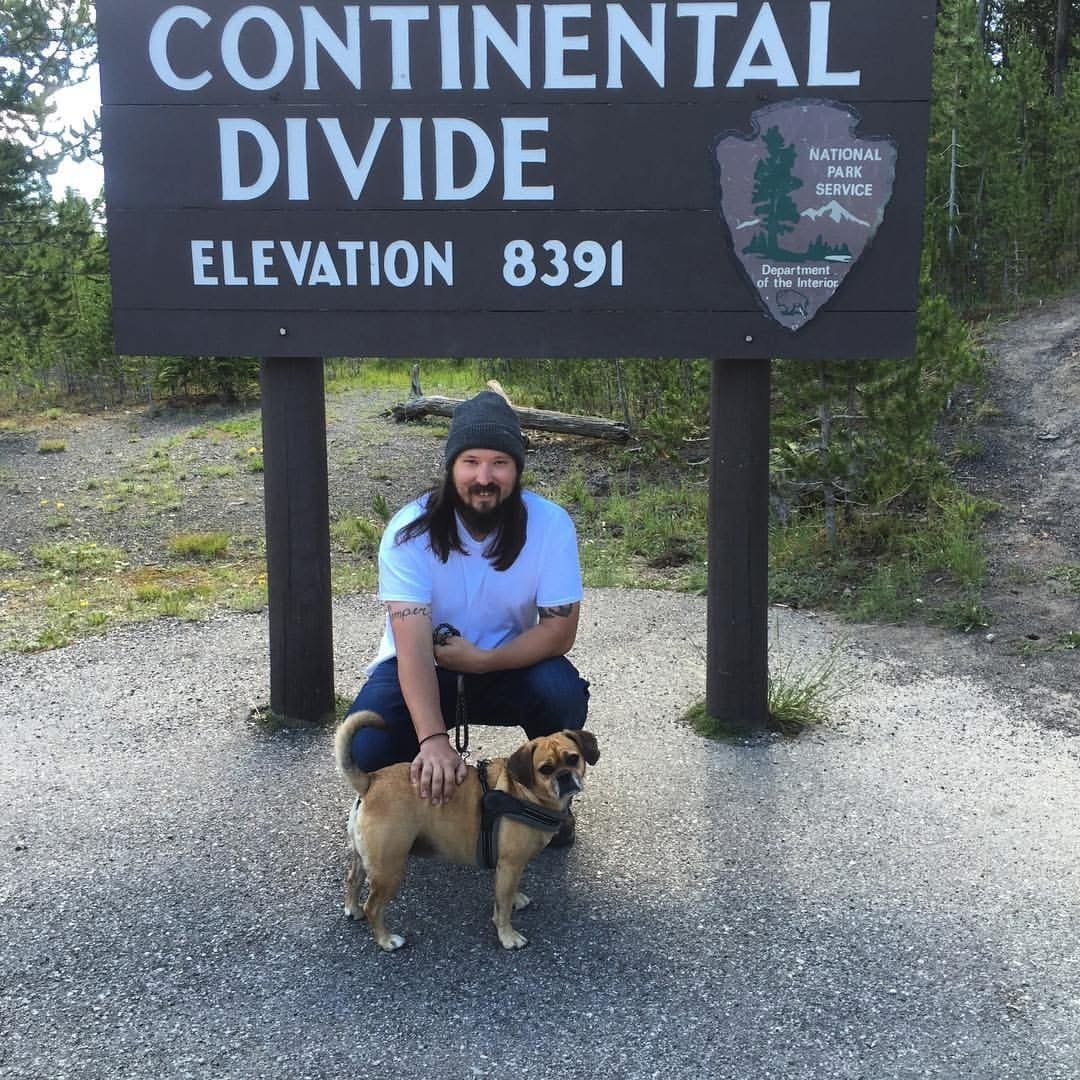
If you were wondering about Kyle's dog's name in the photo above, that's Miko the Monster Dog! 


Email Marketing by ActiveCampaign