|
Follow the trail to the issues, conversations and information connecting the region. |
|
Dear reader,
Transferring the ownership of the Nikwasi (Noquisiyi) mound back to the Eastern Band of Cherokee made history in North Carolina. It was, from what we know, the first time an Indigenous mound was returned to any tribe in the state. |
|
|
|
I’ve been following talks of the transfer of the Nikwasi (Noquisiyi) mound since 2018, but I first learned about the mound growing up in Franklin.
Former publisher of the Franklin Press and Vice Mayor Barbara McRae wrote a history of the mound in 1993, and I remember reading chapters of the book when I was in elementary school.
McRae was a champion in Franklin for the mound and ultimately was one of the founding members of the Noquisiyi Initiative. She passed away after a battle with cancer in 2021. (I wrote a column about her impact on journalism in Western North Carolina at the time.) She was one of many people who worked on this project but didn't get to see the transfer celebrated. |
|
 |
|
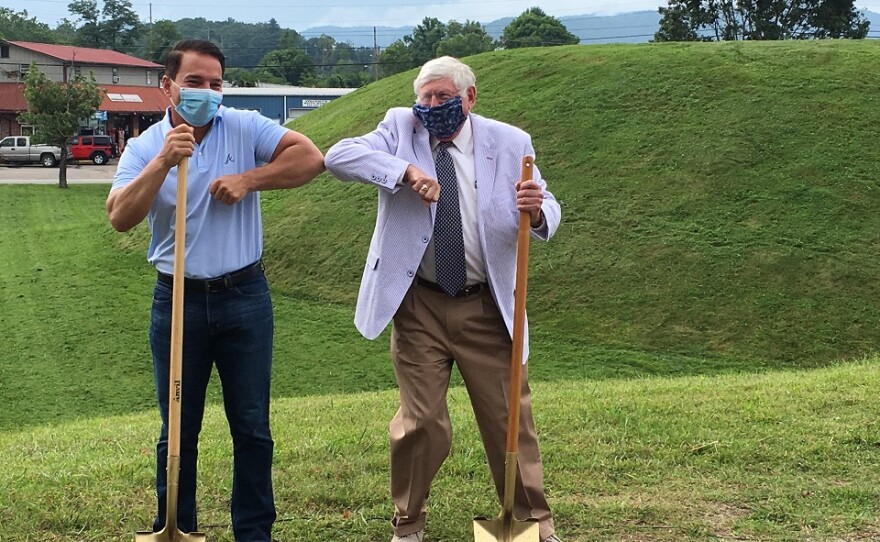
This picture of former Principal Chief Richard Sneed and Former Franklin Mayor Bob Scott in 2020 feels so symbolic of that time. (Lilly Knoepp/BPR) |
|
|
 |
|
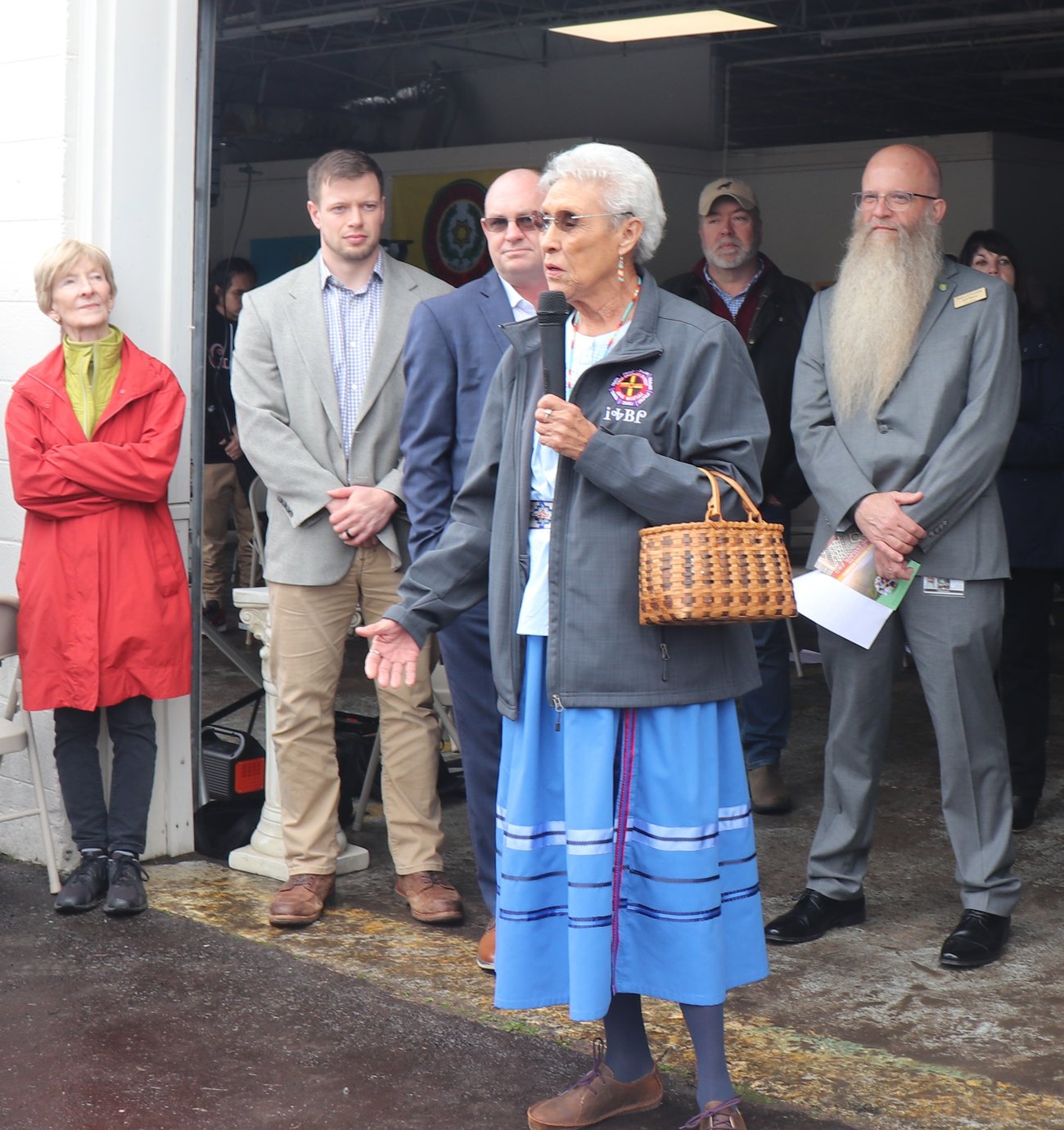
Beloved Woman Myrtle Driver Johnson shared a prayer at the mound deed transfer. (Lilly Knoepp/NC Local) |
|
|
Many people in our area have stories about how they learned about the mound.
During the recent mound deed transfer ceremony, Tribal Council member Adam Wachacha, who represents Snowbird and Cherokee County, remembered coming to Franklin from Robbinsville to play football.
“I played with the Black Knights, and we played the Panthers quite a bit. We come by here and never knew this was a mound. It wasn't till I got older and started to learn a little bit more about my history that it was truly a historic place,” Wachacha said. He explained he later learned about his family’s connection to this land.
|
|
|
|
Sometimes it takes months or years to see the effects of our decisions. So here’s to the choices we make today; may they make the world a better place for the next seven generations. |
|
|
|
|
|
|
Happy trails!
Lilly Knoepp
Senior Western NC Reporter |
|
|
|
|
|
|
|
There are dozens of Indigenous mounds in North Carolina. Why do tribes only own a few? |
 |
|
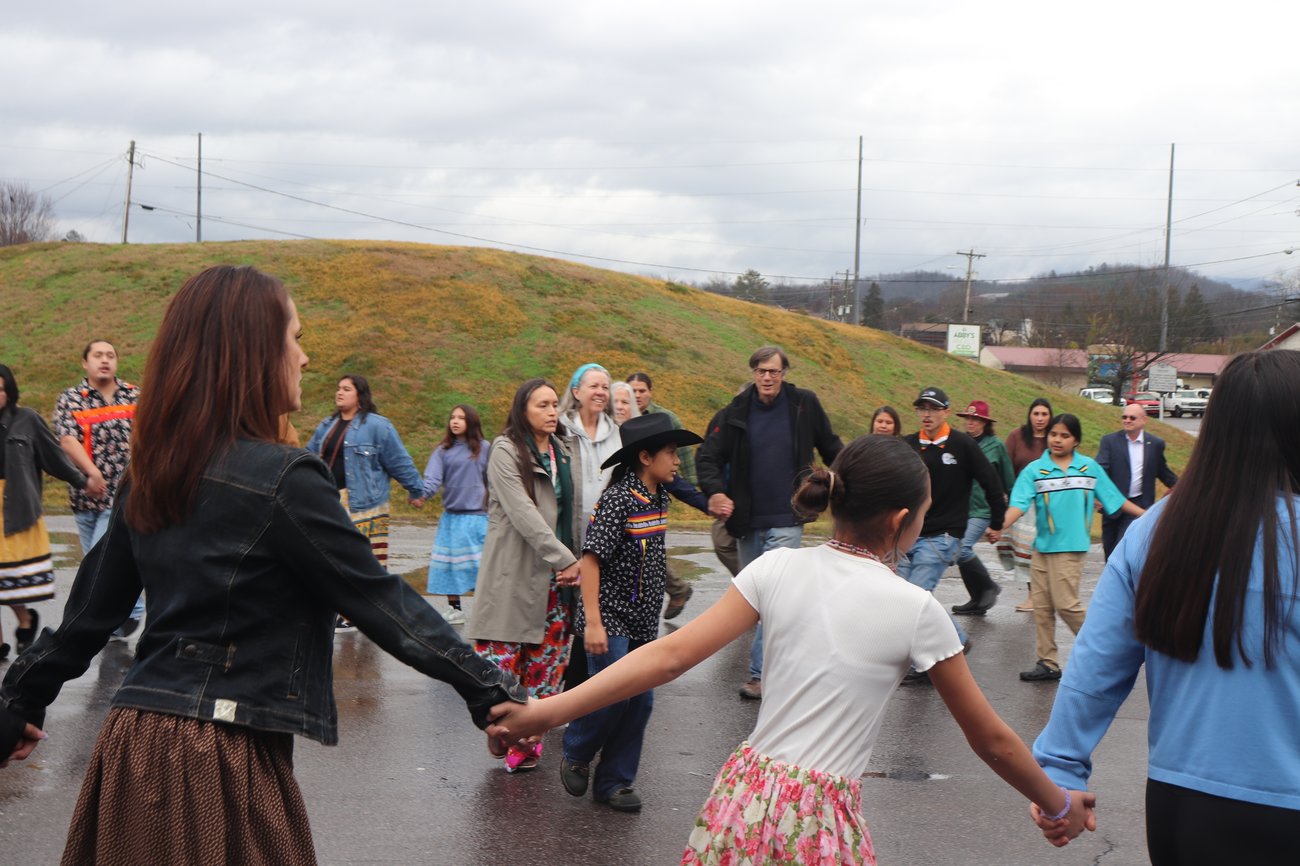
When the Eastern Band of Cherokee last month received the deed to Noquisiyi Mound – a nearly 1,000-year-old mound in Macon County – they made history. The sacred space is one of only a few mounds officially returned to an Indigenous tribe in the country – and the first ever in North Carolina. The Eastern Band (EBCI) is the only tribe in the state that owns Indigenous mounds that were built by their ancestors, according to the state archeology office.
The process of restoring the Noquisiyi Mound, formerly known as Nikwasi, to the tribe took more than 200 years. The town of Franklin’s unanimous vote to officially transfer the property marks one of only a few in the state that have returned to Indigenous ownership.
“This was part of the heart of Cherokee territory, this area. And so as we think about the burden of bringing this mound back, it’s not just a piece of land. It’s part of us,” Principal Chief Michell Hicks said at the deed transfer.
Of the state’s 65,000 archeological sites, only 53 are Indigenous mounds and most are privately owned.
Read more... |
|
More from NC Local |
|
|
|
|
|
|
|
|
|
|
|
|
A response to America's 250th birthday |
|
|
|
|
|
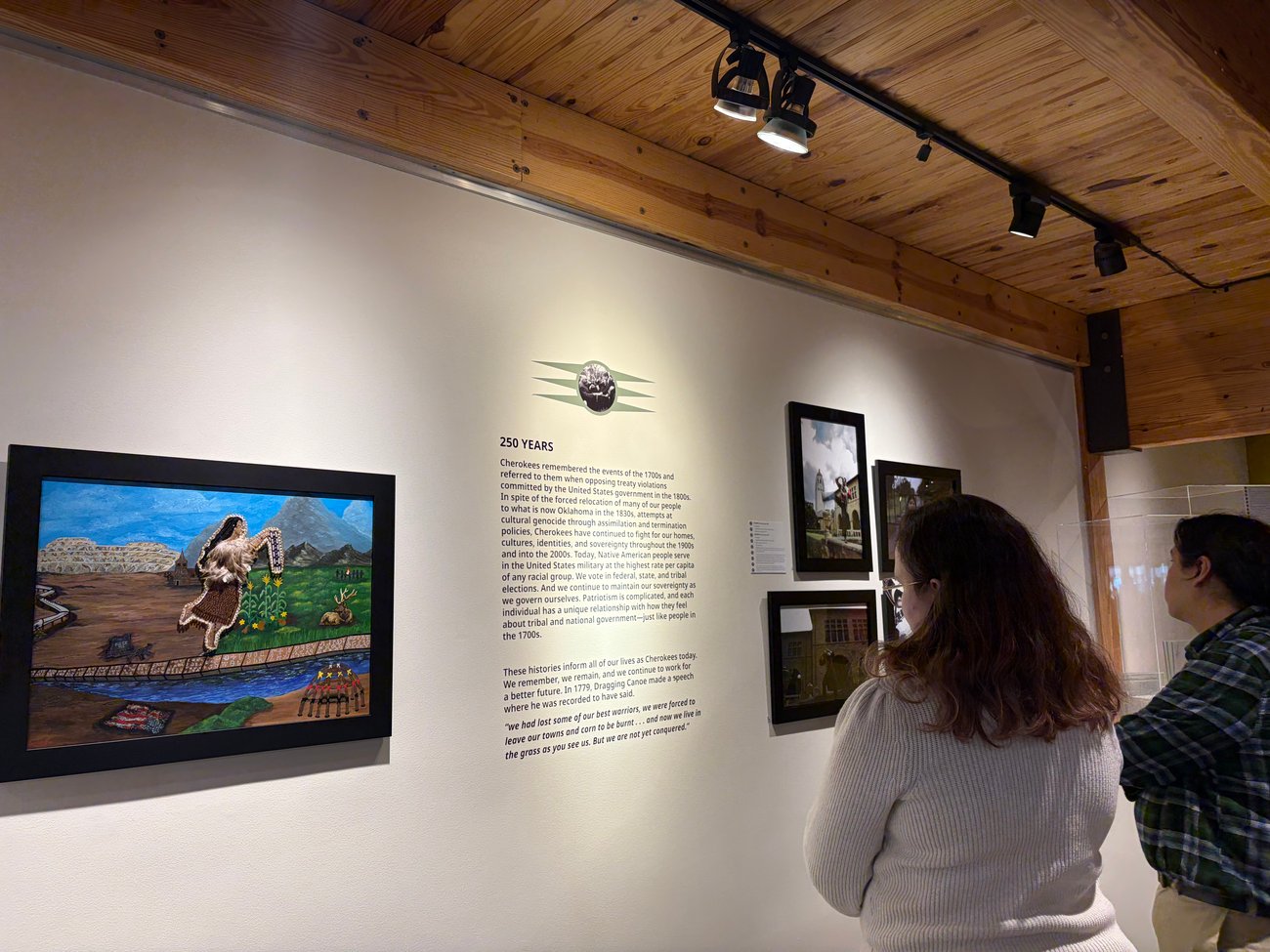
On Tuesday evening, the Museum of the Cherokee People opened a new exhibit that is a response to the 250th anniversary of the founding of the United States.
"Unrelenting: Cherokee People and the American Revolution" explores Cherokee history at the time as well as artistic reactions from community members. |
|
|
|
"Life changed drastically for Cherokees as the United States grew, but we fought hard to hold onto our homes, our culture, and our identity. In these aspects of who we are, we have been and will remain - unrelenting," the exhibit description explains.
The Cherokee sided with the British during the American Revolution, and much of the exhibit shares Cherokee perspectives during the American Revolution and the Cherokee American War.
"I think that looking at the Cherokee stories in those moments, you see that complexity and see how it really is about community. It really is about family.
It really is about our place and our land," Director of Education Dakota Brown, who curated the exhibit with Evan Mathis, said.
The exhibit also moves the narrative into the present day with responses from local artists in the form of stained glass, songs, paintings and other handmade objects.
"We decided to do this artist call out and we got some amazing proposals. I can't believe the response that we got from the artists," Brown said.
The exhibit will be at the museum on the Qualla Boundary through Dec. 30. |
|
|
|
|
|
Support Local Journalism Across NC |
|
Every contribution helps NC Local provide accurate and independent
news and information. |
| I'll donate today! |
|
|
|
|
My open tabs |
-
Rep. Mike Clampitt dies following cancer battle The Republican representative from Swain County served two terms in the NC House. (The Smoky Mountain News)
-
As sports betting booms in North Carolina, so do gambling problems (NC Health News)
-
Prescribed burning continues in WNC: The U.S. Forest Service announced it will continue prescribed burning starting March 18. Read more about prescribed burning here. (The Sylva Herald)
-
Thousands in NC call for independent audit of Duke Energy after high bills (The Charlotte Observer)
-
Debate over Buncombe’s Craggy Dam. Value, cost, benefit and future in doubt.(Carolina Public Press)
-
FEMA extends housing, rental assistance for Helene survivors (BPR)
-
Asheville to clean up and secure Mountaineer Inn. What now? (Asheville Citizen Times)
-
FEMA works to remove temporary housing from western NC after Helene in Hickory (WSOC TV)
-
Obituary for Dr. Gwang Soo Han Han's career spanned more than three decades, he delivered more than 6,200 babies and was instrumental in raising the standards of women’s health care in the region. (Cherokee One Feather)
|
|
|
|
|
|
|
|
 |
|
My Favorite Trail:
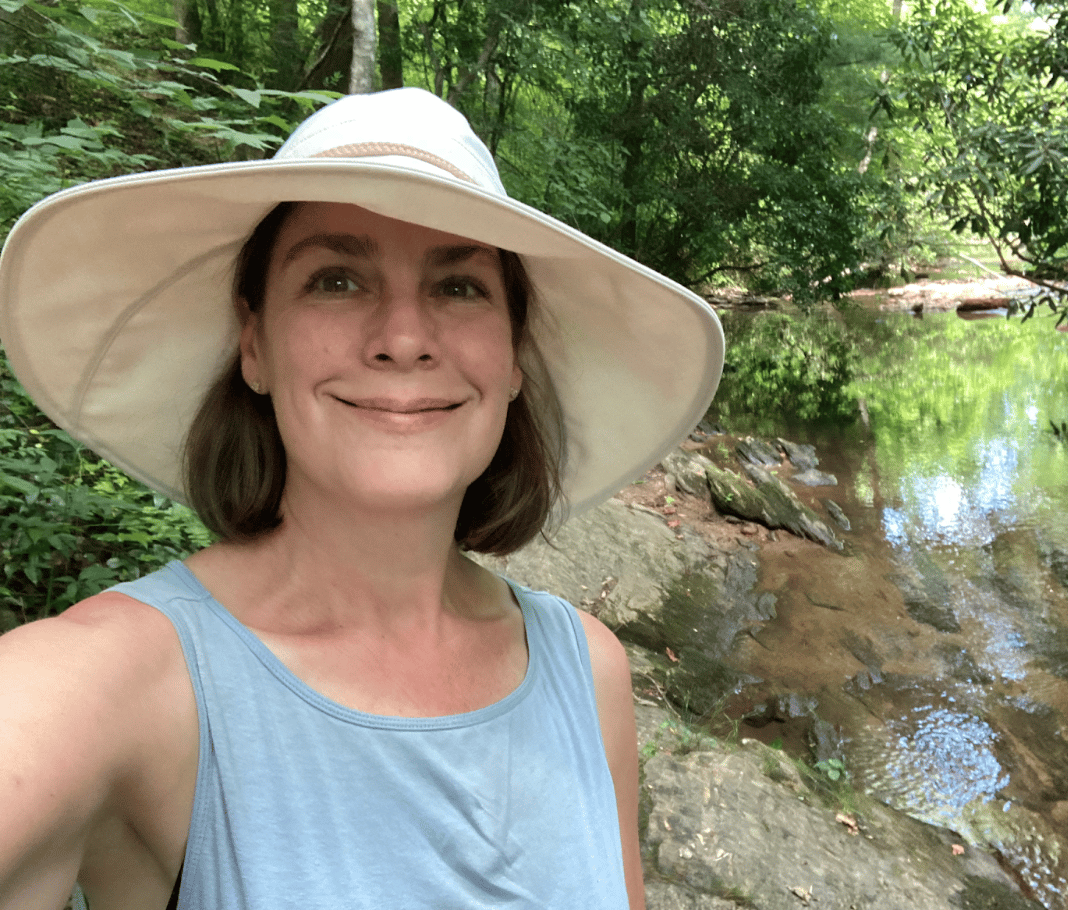
Catherine Komp is the Ecosystem Engagement Director at NC Local |
|
|
|
|
Welcome to a regular feature of The Trailhead: My Favorite Trail. Each installment will feature a WNC trail. This week, Catherine shared her favorite spot . Want to share your favorite trail for a future newsletter? Email me!
|
 |
|
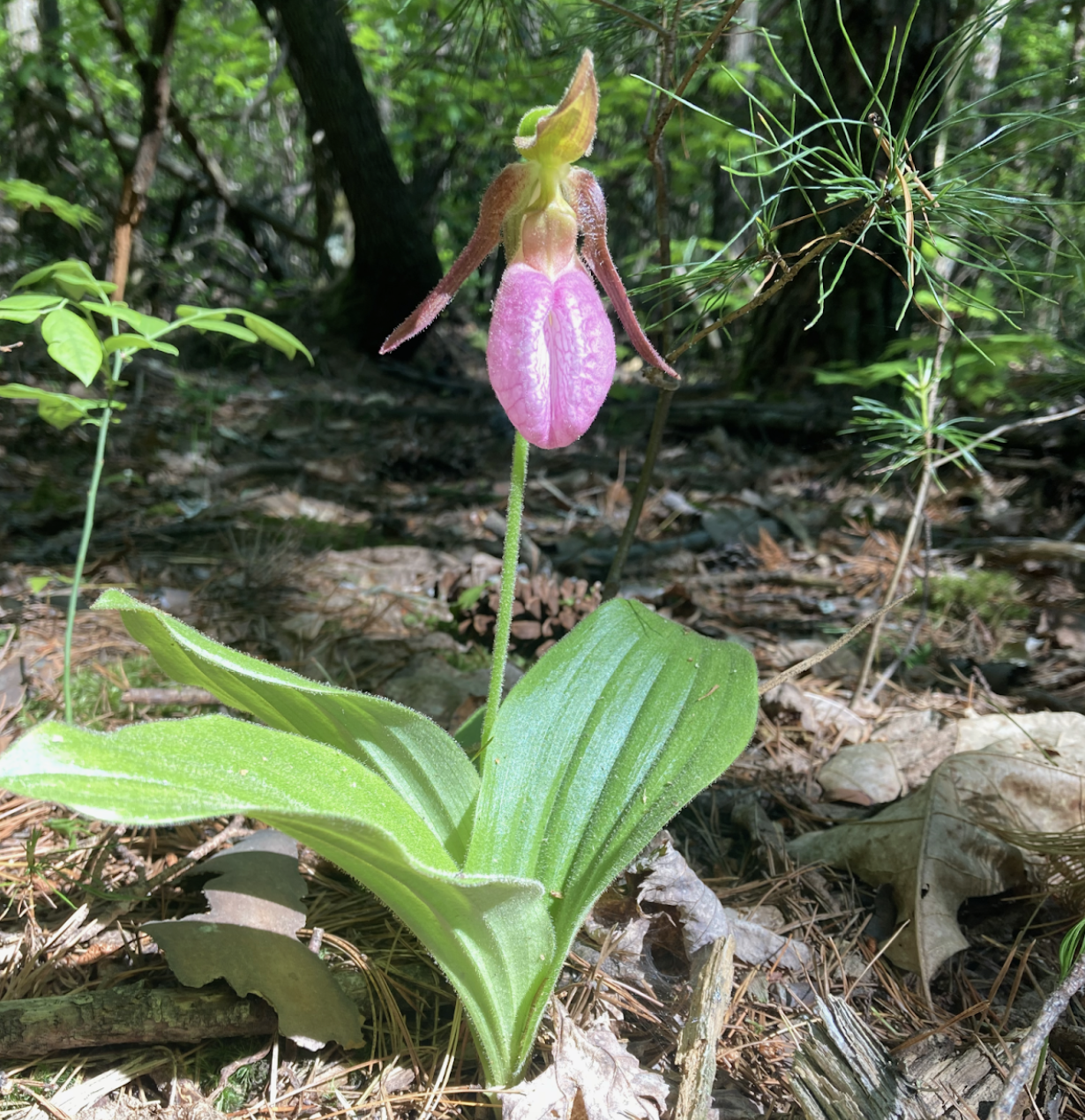
A beautiful lady slipper! (Photo courtesy of Catherine Komp) |
|
Her favorite trail: The Explorer Loop at Bent Creek
Catherine recommended The Explorer Loop trailhead because it "feels so quiet, secluded and special" plus it offers lots of options. There’s a three mile loop with slight elevation changes or another route gets your heartrate up a bit more with about a mile uphill before another two that gradually wind back down. Another section she found weaves up the mountain, over Bent Creek Gap Road, and then on the Lower Sidehill Trail for a total of about five miles.
"Take your pick, nature’s beauty is woven through all three: lush green mountain laurels and rhododendrons, sometimes forming tunnels above our heads, others times showing off the sculpture of their twisting trunks. There are several creek crossings, with crystal clear water and their calming soundtrack, often aided by the chorus of migrating birds," Catherine said.
"You walk through a cathedral of pines and oaks, and during the right season, curious mushrooms emerge from the leaves, including the textured, gray old man of the woods, orange and cinnamon chanterelles and even the occasional velvety red beefsteak."
Catherine remembered one of her first times hiking this loop she spotted something familiar.
"Two, pretty large oval-shaped leaves emerging from the ground. It was familiar not because I had seen them in real life before, but in water colors and stone lithograph prints created by my late father. Could it be? No, it’s not. Is it? Maybe? Really? Truly! It was! I looked ahead and saw another one and then another that had bloomed: a long, graceful stalk and the beautiful and seemingly impossibly shaped flower on top: a lady slipper!
It was an incredibly emotional moment, seeing my first lady slipper in the wild, thinking about my father’s love of hikes, wildflowers and mushrooms, and how he shared that with the world (and me) through his art," Catherine wrote.
"We renamed that part of the hike Lady Slipper Grove. My heart swells each time we pass through."
Catherine spearheads our work to bring you the 2026 NC News & Information Summit. Tickets sold out yesterday, but you can still be added to the waitlist for the March 27 event in Raleigh.
|
|
|
|
|