Share

Plus, habemus mappa 📍
 ‌ ‌ ‌ ‌ ‌ ‌ ‌ ‌ ‌ ‌ ‌ ‌ ‌ ‌ ‌ ‌ ‌ ‌ ‌ ‌ ‌ ‌ ‌ ‌ ‌ ‌ ‌ ‌ ‌ ‌ ‌ ‌ ‌ ‌ ‌ ‌ ‌ ‌ ‌ ‌ ‌ ‌ ‌ ‌ ‌ ‌ ‌ ‌ ‌ ‌ ‌ ‌ ‌ ‌ ‌ ‌ ‌ ‌ ‌ ‌ ‌ ‌ ‌ ‌ ‌ ‌ ‌ ‌ ‌ ‌ ‌ ‌ ‌ ‌ ‌ ‌ ‌ ‌ ‌ ‌ ‌ ‌ ‌ ‌ ‌ ‌ ‌ ‌ ‌ ‌ ‌ ‌ ‌ ‌ ‌ ‌ ‌ ‌ ‌ ‌ ‌ ‌ ‌ ‌ ‌ ‌ ‌ ‌ ‌ ‌ ‌ ‌ ‌ ‌ ‌ ‌ ‌ ‌ ‌ ‌ ‌ ‌ ‌ ‌ ‌ ‌

View in your browser

Did someone forward you this email?

👋Sign up here!

Good morning neighbors,


In case you missed it: A group of local nonprofits recently wiped out $24,000 in accumulated school lunch debt for students across the Alamance-Burlington School System.


The donation offered immediate relief to the families of more than 500 students, but group leaders warn it’s only a temporary fix to a systemic problem.


Even with the slate wiped clean, new school lunch debt accumulates in ABSS at a rate of roughly $3,500 each month, according to SAFE Alamance, a nonprofit fighting food insecurity and poverty in our county.


SAFE is one of the local organizations actively fundraising to build a reserve to help pay off future debts, in partnership with United Way of Alamance County and All For Lunch.


This isn’t the first time school lunch debt has been a topic of discussion in our community. As part of its “The Public Asks” series, The Alamance News shared a report two years ago about a school barring students with lunch debt from attending a dance.


Let’s break down how this latest discussion all started (Spoiler alert: local news!):


Last fall, Elon University senior Anjolina Fantaroni, executive director of the Elon News Network, interviewed UWAC president Shereá Burnett and community partnerships manager Tara Nager for a special report on free and reduced lunch in ABSS.


The interview didn’t make it into the story, but the conversation prompted Burnett to tell SAFE’s Executive Director Tiffanie Jackson what she learned. The two talked about school lunch debt and food insecurity, which led them to independently look into the debt amount.


Burnett also reached out to ABSS school board member Seneca Rogers, who has been openly advocating for universal free school meals in ABSS and statewide.

Burnett asked Rogers if the school board was aware of the issue. “How can we really address this?” she asked.


Many students in the district can't accrue any debt because their meals are already covered under a USDA program that reimburses districts for costs of  free breakfast and lunch to all students in low-income areas, regardless of household income. 


The ABSS website lists 28 out of the system’s 38 schools as of these Community Eligibility Provision (CEP) schools. 


In non-CEP schools, the district also has a “no child turned away” policy for students who don’t have money to pay for their meal in the school lunch line which allows charges to still be made to that student’s account.


Hence, the debt.


While all this was happening, the United Way received a $15,000 donation from McKay’s in Mebane. The company wanted the money to go towards funding something related to food.


“We talked to them about the school lunch debt, and so they said they wanted part of their donation to go to the school lunch debt,” Burnett said.


Burnett said the debt at 11 of the schools was low enough for that one donation to cover it. United Way pitched in an additional $1,500 for another school that wasn't fully covered by the donation. But there were other schools with more substantial debt amounts of more than $3,000.


SAFE started a fundraiser through All For Lunch to pay off what was left.


“What [All For Lunch] also talked to Tiffanie [at SAFE] about was sustaining this and what does this look like on an ongoing basis to keep it at zero?” Burnett said.


That brings us to the efforts currently underway: prevention.


Yes, these groups are actively fundraising, but their primary goal is helping as many eligible families as possible sign up for the free and reduced lunch program so the debt doesn’t accumulate again.


However, systemic barriers remain. Families often skip the application not only due to stigmas, but also due to language barriers, a lack of reliable internet access to navigate the district's online portals, or a fear of entering personal data into a government system  – especially if families are undocumented.


Rogers said removing the stigma around food assistance is critical because children need reliable access to nutritious food to learn, grow, and succeed academically. He would like the school system to ensure families have greater access to the free and reduced lunch application beyond initial enrollment. Eligibility for free and reduced lunch only lasts for one school year.


At SAFE, Jackson is incorporating the application – and assistance filling it out – into the resources they share at their locations and other in-person outreach in the community, including an upcoming door-to-door campaign.


United Way is working with Triad Goodwill to provide an “On The Go” mobile unit - which also regularly visits SAFE – so families can access the application in addition to other traditional services Goodwill provides, like employment services and internet access.


“Maybe there's additional sites that say, ‘Hey, if you don't want to do this at school or if you don't feel comfortable, come to our site. There's no judgment, there's no shame. We will help,” Nager said. “How can we bring that information and get that information to those folks in a place where they feel safe, they feel trusted, where they're already going for something else.”


United Way's next Community Council on April 9 will focus on food insecurity. Register for free here. Below you’ll find a guide to apply for free or reduced meals online and on paper, in English and Spanish. I hope you’ll share them.


And while we are talking education, the school board voted unanimously last night to approve the new redistricted plan. More on that below! 

Laura Brache
Community Engagement Editor

The Alamance Fabric | NC Local

laura@alamancefabric.org

This week...

How to get free or reduced meals in Alamance-Burlington Schools

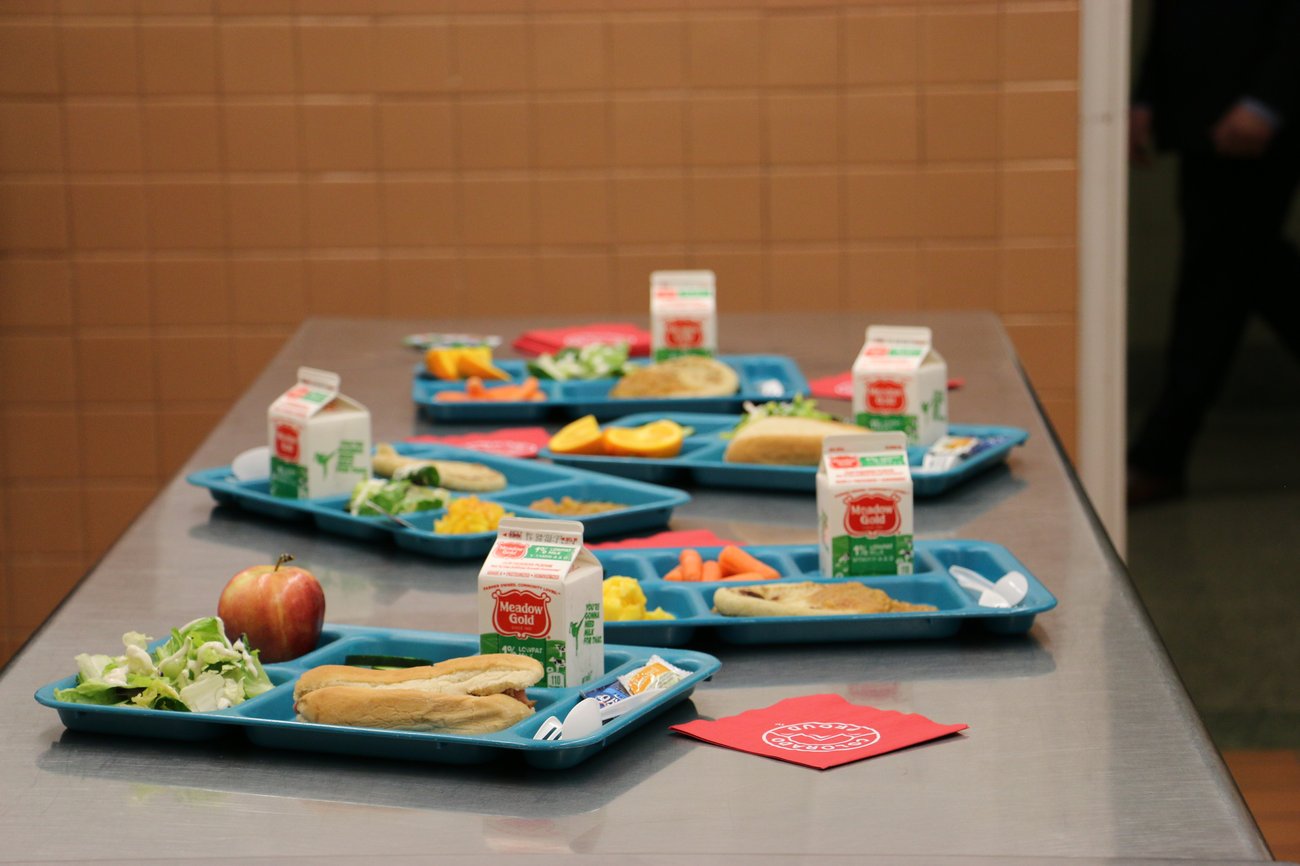
Families only need to submit one application to cover all students in their household. Families must reapply each new school year.
(Credit: Amy Mund / USDA)

ESPAÑOL: Lea ésta guía en español aquí.


In the Alamance-Burlington School System, student breakfast costs $2.00, and student lunch costs $3.10.


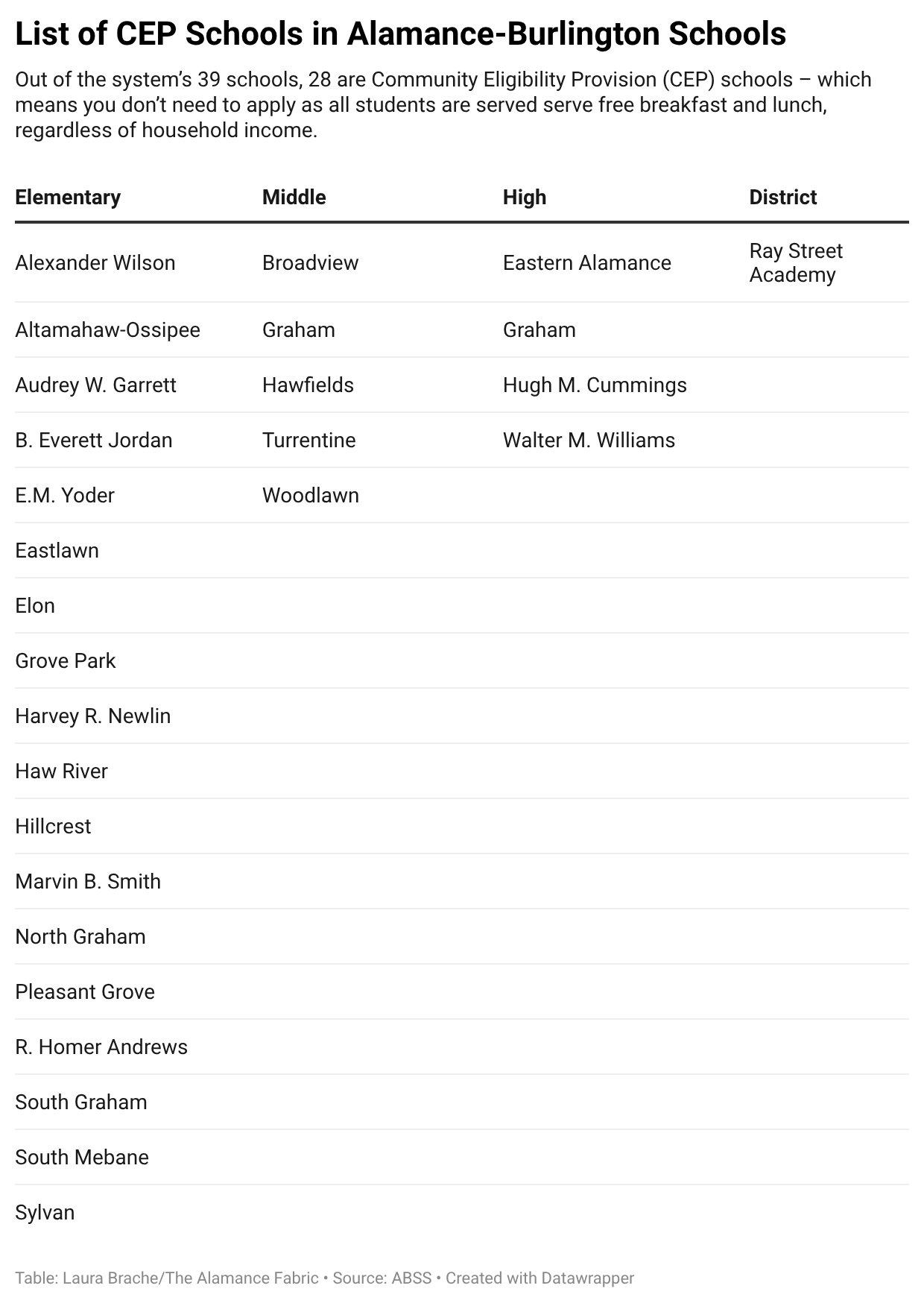
Out of the system’s 39 schools, 28 are Community Eligibility Provision (CEP) schools – which means you don’t need to apply as all students are served serve free breakfast and lunch, regardless of household income.


No application is needed in the 2026-27 school year for the following locations:

In all other schools, the district also has a “no child turned away” policy for students who don’t have money to pay for their meal in the cafeteria line.


However, in non-CEP schools, debt for meals can accrue.


There’s research that shows that students who eat school breakfast, specifically, experience positive outcomes in school like improved academic performance and classroom behavior, and better health outcomes, reports EdNC.


Submitting an application for free or reduced meals ensures that students don’t accrue debt. In most cases, qualifying for free or reduced meals also helps ensure your student qualifies for SAT/ACT and college application fee waivers.


Families only need to submit one application for all students living under the same household. Eligibility for free or reduced price meals only lasts for one school year, so you’ll need to apply again before or at the beginning of each new school year.


Read our step-by-step guide on how to apply for free and reduced meals in Alamance County here.

Alamance-Burlington school board unanimously approves new boundary maps. Now what?

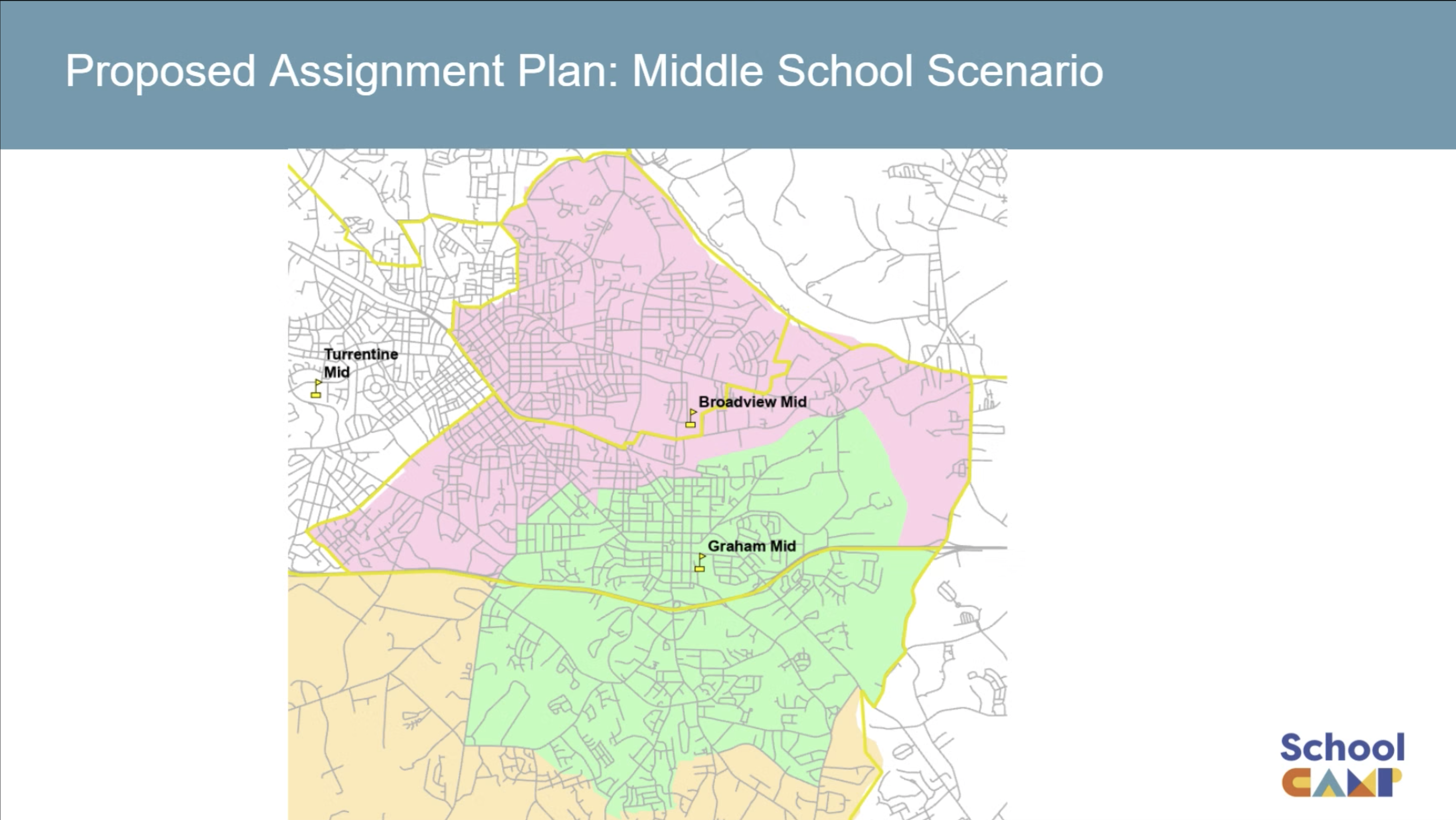
Of the district’s 22,569 students, the changes will affect 820 students in 11 elementary schools and 620 in three middle schools. (Credit: SchoolCAMP/ABSS)

The Alamance-Burlington school board approved the district’s recommended school boundary maps last night, changing the assignments of about 1,400 elementary and middle school students. 


Read more...

Invest in North Carolina's local news.

The Alamance Fabric and NC Local are powered by readers like you.

Donate

What's shaping Alamance

A round up of key local headlines (from our partners and other news organizations) that are defining life in Alamance right now.

Latest from NC Local

Here is the latest statewide reporting from the NC Local team on the big-picture issues that impact us all.

How do recounts and election protests work in North Carolina? The Berger-Page race will show them in real time.

NC Senate leader Phil Berger’s 23-vote deficit to Sam Page in the Republican primary prompted him to request a recount and file a series of election protests.

There are dozens of Indigenous mounds in North Carolina. Why do tribes only own a few?

Of the state’s 65,000 archeological sites, only 53 are Indigenous mounds and most are privately owned.

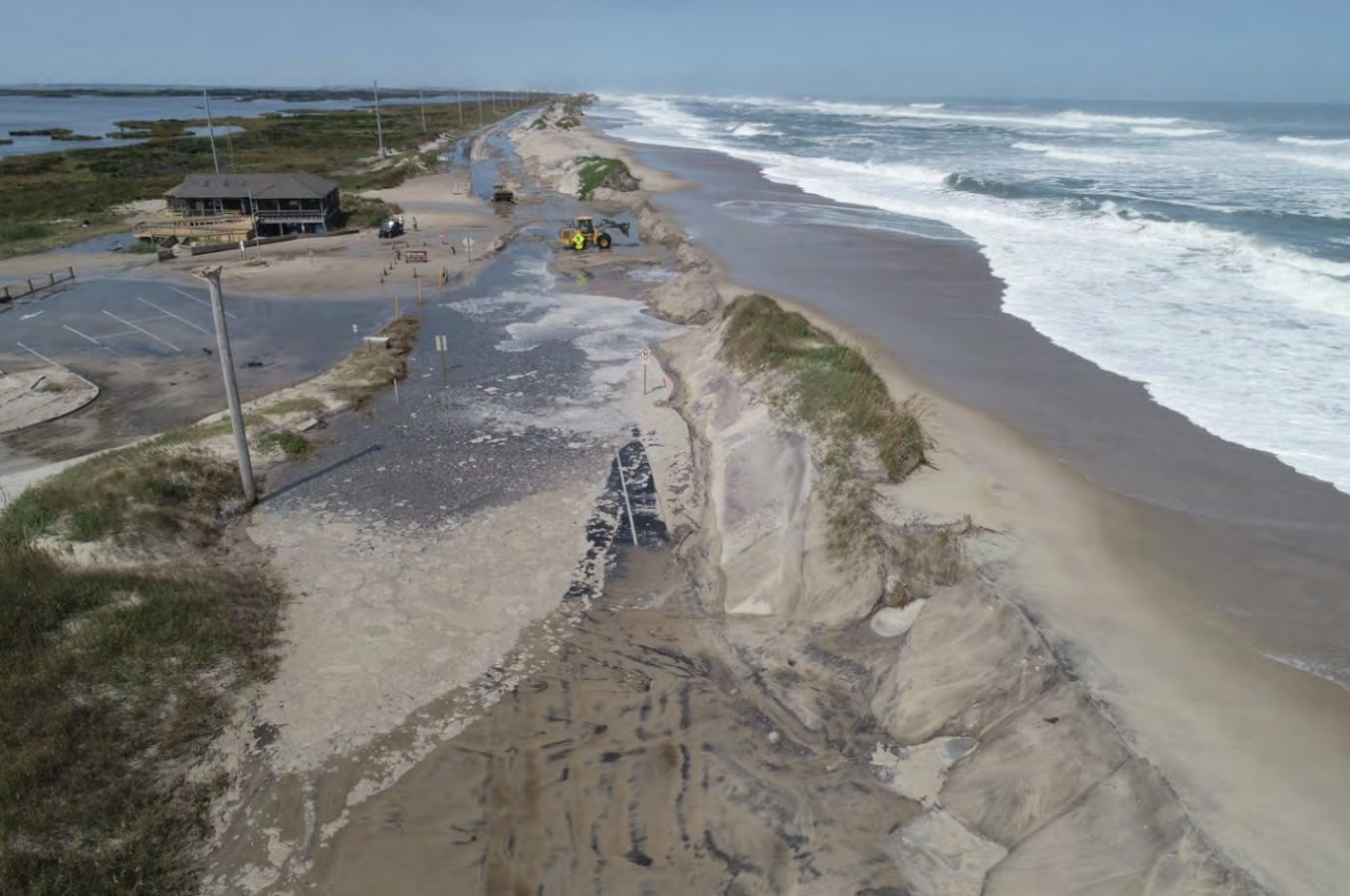
Outer Banks roads and ferries are stuck in a repair cycle. NC’s funding system could be part of the problem.

The constant cycle of emergency repairs might prompt lawmakers to take preventative measures to protect the highway and ferry system from such extensive damage in the future.

State law says public records have to be provided ‘as promptly as possible.’ What does that actually mean?

While local government communications are public, cities vary widely in how they fulfill the legal obligation to make them available.

Community spotlight

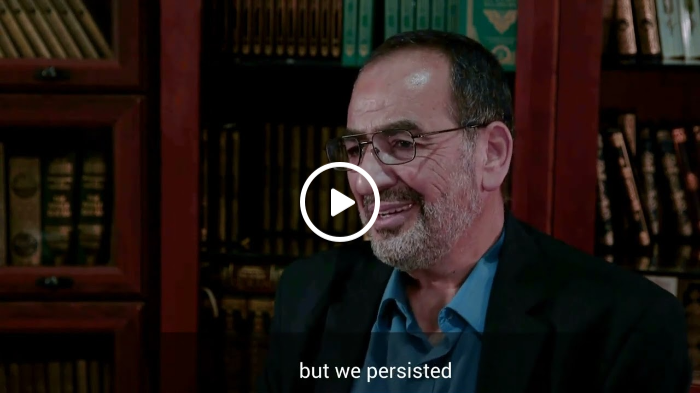
In this segment, we spotlight one of the neighbors shaping our community's future —brought to you in partnership with The Power + Place Collaborative from Elon University's Center for Design Thinking. Below is an excerpt from the profile. Click the video for more.

Turning Enemies Into Friends: The Shaher Sayed Story

Shaher Sayed

“Trying to blend and lose your identity is not the solution”

"Imam Shaher Sayed was raised in Palestine in a multi-faith yet Muslim majority culture, where he found an early passion for learning. Wanting to obtain higher education, Sayed moved to the U.S. to attend graduate school.


Upon finding no Islamic center in Burlington, Sayed helped raise funds to buy and convert an old Christian church into a mosque for the Muslim community to pray and gather together. Some people in the area did not take well to this and Sayed and the Burlington Masjid received many threats.


In response, Sayed decided that they would do what the Holy Quran tells them to do: respond to evil with good and positivity. Sayed and his mosque hosted a gathering for the wider community to come together and interact, therefore lessening the hate and building the bridge of understanding between them."

Things to do

Whether you’re searching for family-friendly fun, a way to support local creators, or to get civically involved, here are a few ideas:

  • Graham Historic Resources Commission Special Meeting
    Tuesday, March 24 at 6 p.m.
    Graham City Hall
    201 S Main StGraham, NC 27253
    On the agenda: "New Downtown Park"
    Open to the public

  • May Memorial Birthday Party
    Thursday, March 26, 2026 at 3 p.m.
    Large Meeting Room at May Memorial Library
    342 S Spring St, Burlington, NC 27215
    Free

  • Community Shredding Event
    Saturday, March 28, 2026 from 9 a.m. to noon
    Parking lot at Howard Hanna Allen Tate Real Estate
    3315 Garden Rd, Burlington, NC 27215
    Free

  • Free, family-friendly Easter events in:
    Gibsonville, Burlington and Mebane
    Saturday, March 28, all between 9 and 2 p.m.

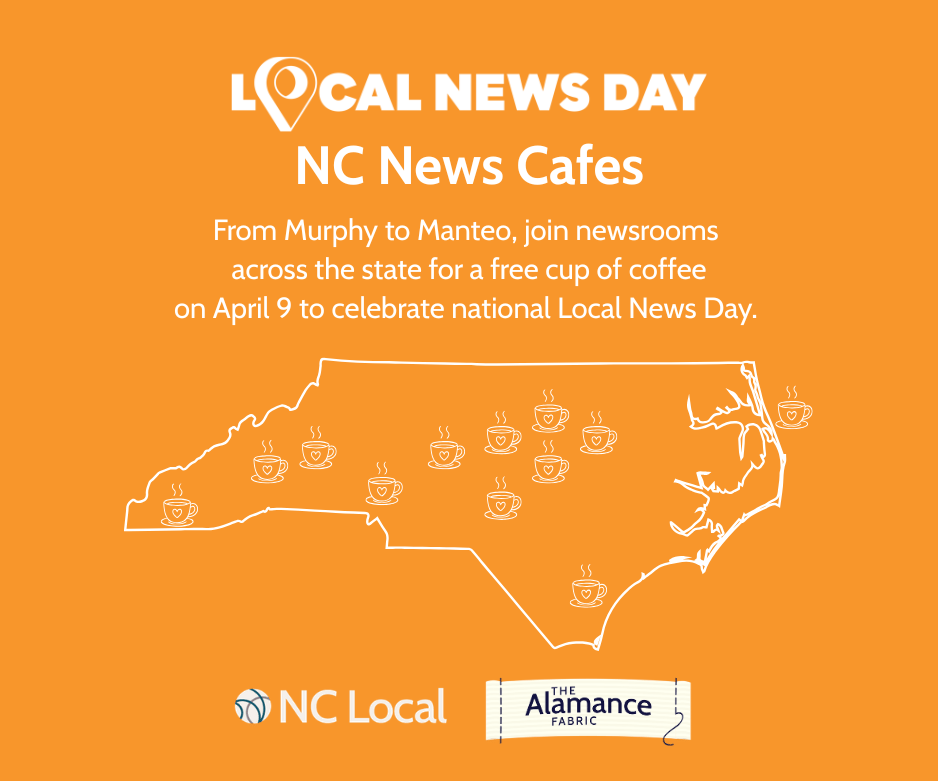
  • ICYMI: Save the Date for our News Cafe
    Thursday, April 9 at 10 a.m.
    Sol Café at the Alamance Dream Center
    1423 N. Church St., Burlington, NC 27217
    The event is completely free, but we’re capping it at 50 guests, so please register here or click the image below.


A small favor? 

Your gift ensures that Alamance Fabric and NC Local can make complex policies understandable for Alamance residents. Every contribution helps readers stay informed, engaged and connected.


Will you make our community better by powering journalism with your donation?

Donate today!
Email Marketing by ActiveCampaign