|
Greetings all, it’s Wednesday May 6. When you look at the NC news and information ecosystem, there is a remarkable individual who’s been tirelessly working to support, strengthen and uplift organizations across the state. Since 2020, Lizzy Hazeltine has led the North Carolina Local News Lab Fund, doing all the quiet and steady work needed to attract millions of dollars in philanthropic investments from state and national funders. Identifying early on the wide range of trusted messengers and the importance of media equity, the Fund has supported AMEXCAN, Code the Dream, NC Field, Refugee Community Partnership as well as more traditional newsrooms like Border Belt Independent, Enlace Latino NC, NC Health News, Smoky Mountain News and QCity Metro. And of course, the Fund has been an integral supporter of this newsletter, NC Local and our predecessor organization, the NC Local News Workshop. The Fund’s impact is not just monetary. Lizzy is a passionate “network weaver,” connecting us to resources and importantly, to each other as we all work to strengthen the ecosystem and keep communities informed.
After a transformative seven years, Lizzy is getting ready for a new chapter, transitioning out of her role as Director of the Fund. And you can celebrate all she’s accomplished at a special gathering tomorrow/Thursday in Durham. RSVP here.
Thank you Lizzy for your leadership, thoughtfulness and the lasting impact you’ve made. We are so grateful!
Coming up today:
-
George Masa left a legacy in the Appalachian mountains that countless people cherish. We chat with the filmmaker who’s spent 25 years uncovering his story.
-
The Stillwater Awards recognize NC prison journalists for their excellence.
-
And, the Charlotte Journalism Collaborative's 5th annual Local News Impact Summit takes place May 21. Reserve your free ticket today!
Glad you’re here, let’s get started. |
|
|
|
|
New film sheds more light on a monumental figure in North Carolina
‘One immigrant’s passion helped others recognize landscapes worth protecting’ |
 |
|
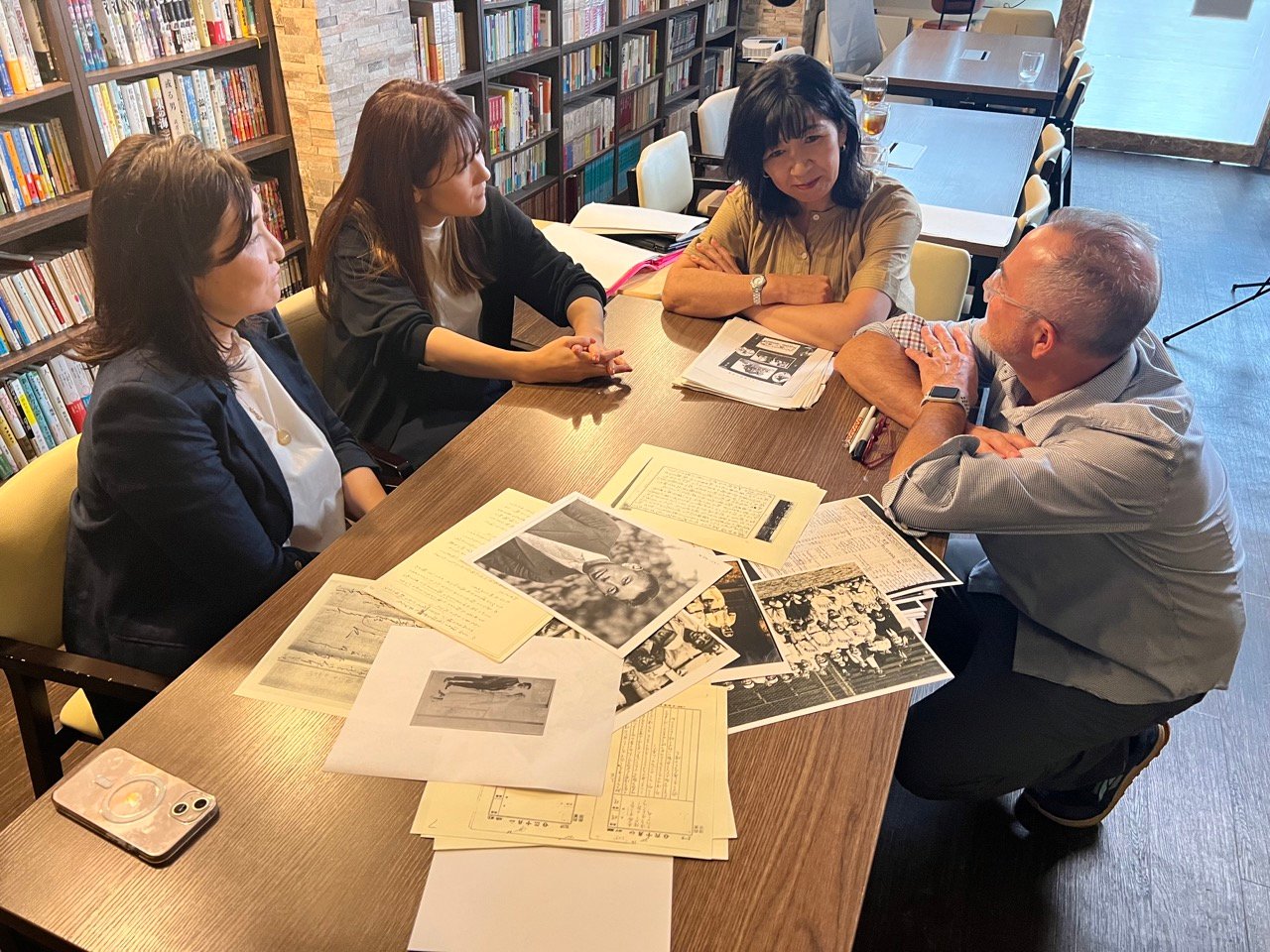
Paul Bonesteel with Tokyo research team, Tokyo, Japan (Photo: Janet McCue) |
|
|
|
Asheville-based filmmaker Paul Bonesteel begins his new film with a quote from Alice's Adventures in Wonderland:
“I almost wish I hadn't gone down that rabbit-hole—and yet—and yet—it's rather curious, you know, this sort of life!”
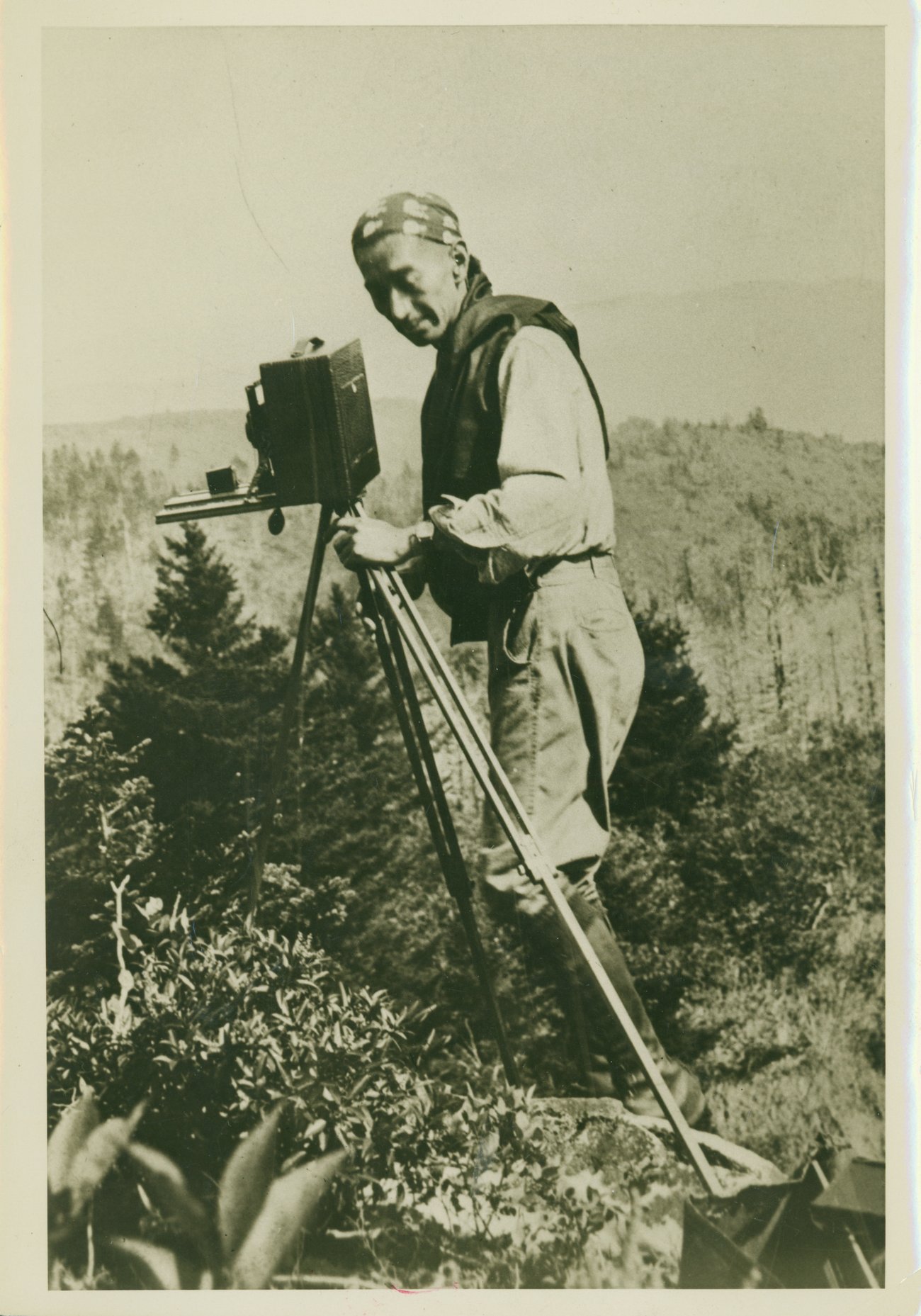
Bonesteel’s own rabbit hole is both vast and deep. He’s spent a quarter century researching the life and work of George Masa, a Japanese immigrant who came to Asheville around 1915, bringing with him a love of the mountains. He quickly was promoted from his work in the laundry of the Grove Park Inn, eventually getting a camera and teaching himself photography. He worked for local news organizations, but also captured stunning images of the wilderness throughout Western North Carolina.
His work as a photographer, conversationist and map maker had a lasting impact, helping create Great Smoky Mountains National Park and the Appalachian Trail.
But even today, many don’t know about the contributions of George Masa. And Bonesteel, whose first film about Masa was released in 2003, wanted to find answers to other questions: Why did he leave Japan? What did he do when he first came to the U.S.? How did he overcome racism, including being targeted by the KKK in Asheville? All these years later, did people in Japan know about his remarkable work here in the U.S.?
Bonesteel’s new film, "A Life Reimagined," is co-produced with Amy Chase and associate producer Megumi Nishikura, and co-researched with Janet McCue, Linda Harms Okazaki and a team of researchers in Japan. Using newly translated letters, genealogical research, mountaineering logs, school records and newspaper archives, it surfaces answers to many of those questions and retraces many of the steps he took as he captured sweeping vistas and inspired countless others to protect the mountains he loved.
Today, we chat with Paul Bonesteel about the power of Masa’s work, how to research complicated histories and what questions he'll continue to pursue on this 25+ year-long journey.
➡️ Learn more: Find a copy of a very comprehensive press kit here.
❓ Interested in chatting with Paul Bonsteel about the film? Contact LeeAnn Donnelly with Laurel Bird Media at hello@laurelbirdmedia.com or 828.778.2981
📺 How to watch: “A Life Reimagined: the George Masa Story,” premiers nationally this week on PBS stations and on PBS NC on May 12. You can also stream the film anytime.
You've researched George Masa's story for 25 years and have now done two documentaries and a book, co-written with Janet McCue. Why is this story so important to tell?
Paul Bonesteel: I keep meeting people, I keep talking to people who have no idea who George Masa was. Having been at it for quite some time, I see there’s always a need to retell stories. In this case, dive in and try to tell the story accurately and comprehensively. Especially since a lot of the story has never been known. That has fueled Janet and I. The mystery, the curiosity, the fascination has empowered the work and kept me very interested in Masa for a long time. |
|
|
 |
|
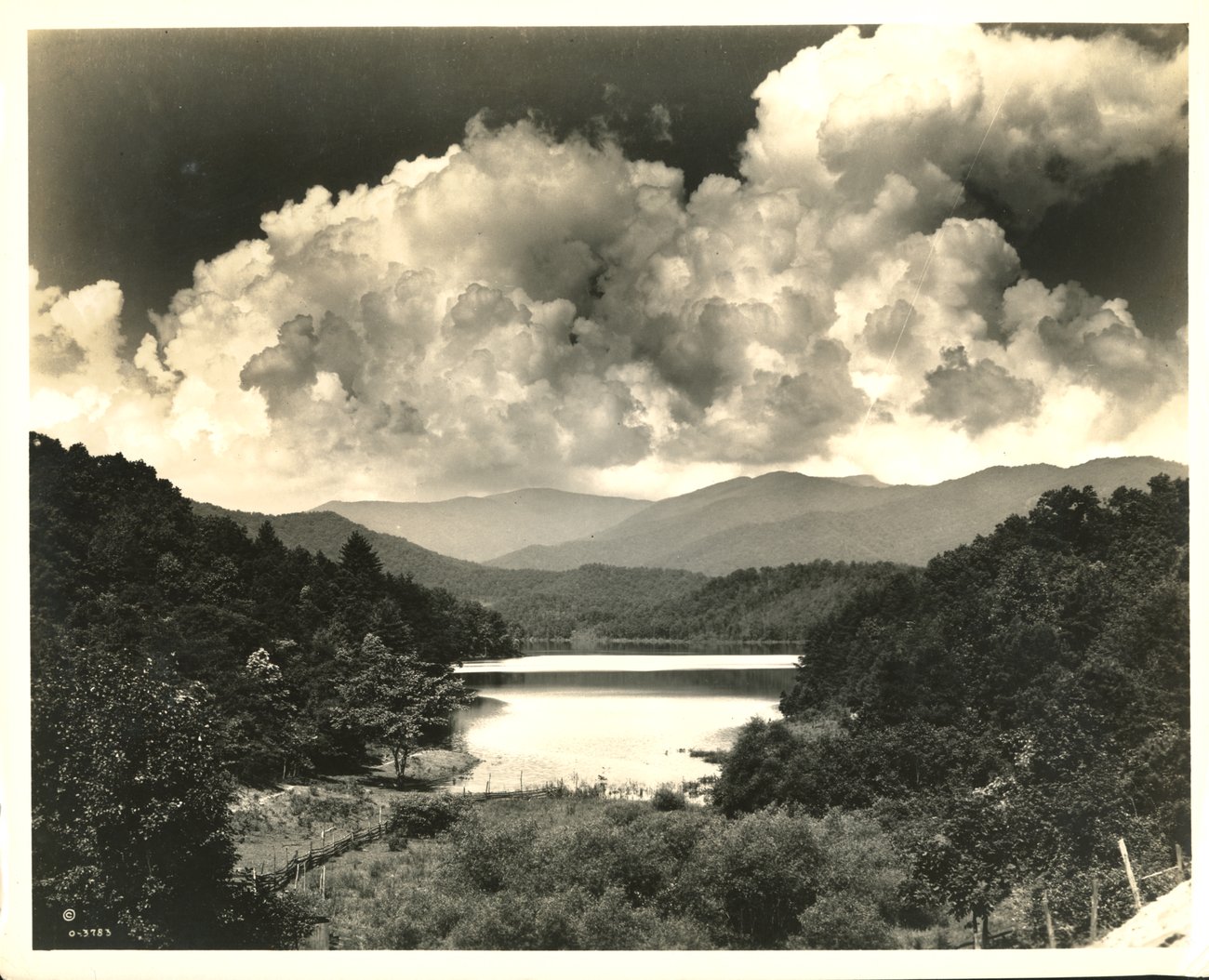
Great Smoky Mountains National Park. (Appalachian Trail Conservancy records, Special Collections Research Center, George Mason University Libraries) |
|
|
|
George Masa was an exceptional artist, with an eye for shape, contrast and framing in his stunning images of the mountains in Western North Carolina. What role did his photographs play in helping create Great Smoky Mountains National Park?
Paul Bonesteel: Masa really contributed images of places that had not been visited by many people, but also that were beautiful and that illustrated that the Great Smokies could be a National Park-level of allure. That was very important. This was a really competitive situation, not only for the funds to buy the land and negotiate all the details. But the federal government and lobbyists, they were looking at other areas: Linville Gorge, the Grandfather Mountain area. There was talk of areas down in Georgia. So there was a possibility that they could have chosen another site altogether.
The other aspect is that few photographers had been to these places and when Horace Kephart started writing articles, much of the audience in Washington, politicians, lobbyists, governors – they were more used to reading prose about a place. Kephart was obviously good at writing that. But images were really coming into their own and photography and paintings from the west coast had long been very powerful in the early part of the [National Park] movement. On the east coast, not as much. So Masa had the passion and the affection and appreciation for the landscape and he was one of the most enthusiastic and talented photographers.
What can we learn from George Masa about the power of visual storytelling?
Paul Bonesteel: We can get into the photographic architecture of his work. But I take away more from the story of Masa as a person and how photography became his tool, that gave him credibility, it gave him power, it gave him means to run a business and work. This skill and his enthusiasm for it and his talent with it, allowed him to reach the highest levels of the region and the area, and perhaps you can say nationally. Though he was far less appreciated than other photographers who were better known. He wasn’t appreciated while he was alive like Ansel Adams was. Masa was relatively unknown in that regard.
But a single image can have power. And that’s still happening today. Of course our social feeds are filled with media of all kinds. But isn't it the powerful image that stops you on your scrolling? The really good ones make you think, make you look deeper, make you reconsider things.
|
|
|
|
Your book and film uncover new details about George Masa's life before he came to Asheville. We won't share any spoilers here! But we will ask about rabbit holes. In a project like this, how do you recognize when your research is leading you somewhere meaningful versus pulling you away from the core story?
Paul Bonesteel: With the book we had a wider latitude, and did indulge in some aspects of the story that helped make a broader context for Masa’s life here, and those rabbit holes are ones that I think the reader enjoyed. In the film, it's not always wise or interesting to do that. As for recognizing a bottomless rabbit hole, the difficult part is they often seem like they could land on solid ground at any moment. For example, the story of George Masa’s 4000+ missing negative photos that probably went to Florida in the late 1950s with a photographer who had bought them from his estate in 1934. That one still feels like we could find them all in a basement somewhere. But that story, while interesting, has become less so, as we have a better handle on how many of Masa’s photos have been found, with many not clearly credited to him (for various reasons).
But it’s like any trail, if you don’t know where you’re going, you don’t know what to look for. If you don’t find bread crumbs along the way, you begin to lose your enthusiasm and get a sense that it’s not going anywhere. I’ve been wrong about some of those and the hunches did play out.
|
|
|
|
For others looking to weave together complex histories or even just follow a story or living person over time, what methods or approaches do you recommend?
Paul Bonesteel: I would normally read everything you can on the subject. With George Masa, there are appearances in other histories and other articles about the Great Smokies that mention him. Those were important to get foundational clarity on how Masa’s life had been portrayed through the years.
Some of the things that made Masa’s background more available is the digitization of many newspaper archives and the ability to search them. In our case, that included the local papers in North Carolina, but also in Portland, Seattle and other parts of the west, the south and Japan.
As you see on Finding Your Roots on PBS, newspapers are the folk history of our civilization. They are not entirely accurate of course. They are written by humans, they have motives and mistakes can be made. But names pop up all the time. Someone was arrested, or someone opened a business, or someone hosted a pot luck, bridge party and their name and address shows up and that leads you to a certain neighborhood. There’s a lot of that linear and non-linear thinking when it comes to looking into historical stories.
Are there any other unanswered questions you will continue to pursue?
Paul Bonesteel: We have just completed another wave of largely unsuccessful research in Japan and the West Coast of the US trying to get more clarity on Masa’s departure from Portland, his wife and who knew what in Japan. Those will continue, along with attempts to locate descendents of his birth family. In addition, research into his photography, led by Angelyn Whitmeyer and her gerogemasaphotodatabase.com site is going strong. She continues to find and post images that are Masa’s work, sometimes original prints, sometimes from newsprint. My work seems to overlap with hers a lot, and we share ideas and successes.
Thank you Paul and team for all your work in researching and uplifting the story and impact of George Masa!
|
|
|
|
|
👏 Well Done 👏 |
|
👏 Phillip Vance Smith II has been recognized with SPJ & Prison Journalism Project's 2025 Stillwater Award for Journalist of the Year. Smith, an incarcerated journalist and writer, is a contributor to Bolts, The Humanist and NC Law Review and the former editor of Nash News.
"Phillip Vance Smith rose to the top for doing one thing better than the others: Interviewing multiple sources and eliciting compelling quotes. It’s hard enough for professional journalists to do this. Our judges marveled at Smith’s ability to do so behind bars," wrote the judges.
In a quote shared to a volunteer-run Bluesky account, Smith said "I've grown from an ignorant 20-something who could barely write a coherent sentence, but I have farther to go...I hope each word I write brings us closer to ending the age of mass incarceration."
You can read this powerful piece by Smith about the role of prison journalists and the constraints they face.
👏 The Stillwater Awards also recognized Franklin Standard, produced by incarcerated journalists in Bunn, NC, as Best New Prison Publication. In the debut edition that came out last year, Editor Caddell Kivett said they "encourage active participation in shaping our content from readers everywhere, inside and outside of prison."
"In this inaugural issue you will find calls for creative contributions and invitations to join us as journalists. Our mission is to deliver essential and relevant news and features, while bridging the gap with our state’s free populace, illuminating our shared humanity and common bonds," wrote Kivett.
Stillwater Awards Judges said the publication is "anything but standard" and the debut issue “stands up well against the best existing prison publications.”
👏 Journalist and writer Lyle C. May, who's been incarcerated at Central Prison in Raleigh for three decades, was named a 2026 Writing Freedom Fellow. The program recognizes and supports poets, fiction and creative nonfiction writers impacted by the carceral system, and provides them with an award, professional development opportunities and a network of other writers.
May is the author of "Witness: An Insider’s Narrative of the Carceral State" and "The Transformative Journey of Higher Education in Prison: A Class of One," and is working a third: "The Politics of Mercy."
Congrats to Lyle, Phillip and the team at the Franklin Standard! And thank you to Jacob Biba for sending these my way.
Help us recognize the important work being done across the NC news and information ecosystem. Send us “Well Done” nominations for any beat by replying to this email or emailing us at catherine@nclocal.org.
|
|
|
|
|
|
Bulletin Board |
Jobs |
|
📌 Executive Director, NC Health News (Remote in NC) 💰
📌 Executive Editor, Restoration Media, Wilson
📌 Staff Writer, Smoky Mountain News, Waynesville
📌 Public Programming Director, The Assembly (Remote in NC, Triangle preferred)
📌 Deputy Director, Audience and Growth, The Assembly (Remote in NC, Triangle preferred)
📌 Local Government Reporter, INDY/The Assembly, Durham 💰
📌 Charlotte Editor, The Charlotte Observer
📌 Reporter/multimedia journalist, The Enterprise, Spring Hope
📌 Freelance Bilingual Journalist, Enlace Latino NC, Jackson and Macon Counties 💰
📌 Freelance Bilingual Journalist, Enlace Latino NC, Burke County 💰
📌 News Director, WFDD, Winston-Salem
📌 Morning Edition Producer, WFDD, Winston-Salem
📌 Editor-in-Chief, Asheville Watchdog, Asheville 💰
📌 Executive Director, Education Writers Association (Remote) 💰
📌 Deputy Managing Editor & Senior Editor, Local and Engagement (Remote) 💰
Internships
📌 Fall Youth Reporting Internships (Multiple available), WUNC 💰
|
Opportunities & events |
|
📅 How Climate Denialism Is Evolving With Trump in Office: In April, a climate denial conference hosted in Washington, D.C., and boasting US EPA head Lee Zeldin as a keynote speaker signaled a new era in US politics: from a slow but growing embrace of climate science in federal policy to outright rejection of the scientific consensus. Join Covering Climate Now for a special webinar exploring how the Trump administration's overt embrace of climate denialism in Washington is creating a permission structure for more denial at the highest levels of government in the US and beyond. In this press briefing, CCNow will be joined by Manon Jacob, Climate Digital Investigation Reporter for Agence France-Presse; Maxine Joselow, Climate Policy Reporter for The New York Times; and Rei Takver, Reporter and Researcher for DeSmog. May 7, Noon.
🌱 2026 Leroy F. Aarons Scholarship: From NLGJA, this opportunity provides up to $5,000 in tuition funding to an LGBTQ+ student who plans a career in journalism and is committed to fair and accurate coverage of the LGBTQ+ community. Open to current or incoming undergrad students in any discipline or graduate students enrolled in a journalism program. Application deadline: May 15.
📅 CJC Local News Impact Summit 2026: The Charlotte Journalism Collaborative’s 5th annual gathering on May 21 brings together journalists, community leaders, nonprofits, and residents for a day of conversation, connection, and action. Tickets are free, but you must register in advance. May 21, 10:00-4:00 pm at Queens University.
Sessions include:
Resilience in Real Time: Community Response and the Human Impact of Policy – exploring the community response and media’s role in covering local immigration and border patrol activities. Moderated by Jesse Pierre, WCNC-Charlotte and panelists include Diego Barahona, editor of La Noticia, and local residents.
Shifting Ground: Nonprofits, Policy and the Changing Landscape – moderated by local journalist Jim Morrill, the panel explores emerging data on how federal funding priorities and policies are impacting organizations in Charlotte, from service delivery to long-term sustainability.
Libraries as Civic Infrastructure – Knight Foundation’s Charles Thomas sits down for a conversation with Shamichael Hallman, author of “Meet Me at the Library: A Place to Foster Social Connection and Promote Democracy.”
Covering Conflict: Local News and the I-77 Expansion Debate – exploring the I-77 expansion project in Charlotte and how local media has played a role in informing communities. Panelists include Charlotte City Councilman Malcolm Graham, WFAE political reporter Steve Harrison, and Shannon Binns, founder and executive director of Sustain Charlotte. The panel will be moderated by Biddleville resident and managing editor at Open Campus, Colleen Murphy.
Charlotte Documenters: Building Community-Powered Journalism – an interactive session with Documenters Network representatives to introduce the program and invite community members into the planning. Announced earlier this year, Charlotte Documenters will train and pay local residents to attend public meetings and share what happens, making local decision-making more transparent and accessible across Charlotte. |
|
|
|
|
That's it for this week. Next time you visit WNC, in the words of George Masa, "go into the woods and get the fresh balsam air. Then come back, and fight the strong fight." Thank you for reading, and as always know you are appreciated for all you contribute to the NC news and information ecosystem! —Catherine |
|
|
|
|
|
|