|
Good morning all, it’s Wednesday May 13. Today I am headed, along with a handful of other North Carolina news and information friends, to the Collaborative Journalism Summit in Philadelphia. While I am a first-timer, this annual gathering put on by the Center for Cooperative Media is marking its 10th anniversary this year and the vital work of helping news organizations collaborate. Because that’s a central part of my role (and everyday joy) at NC Local, you can imagine how excited I am to meet others working in this space and learn from their experiences collaborating on projects, audience engagement, documenting impact and even the business side of news.
I’ll also be teaming up with Chelsea Naughton for a session titled “Events ARE journalism: a playbook for high-impact storytelling collaborations.” We’re going to share what we did — and what we learned — bringing together 12 news and community organizations for the Heart of the Mountains Helene anniversary event. And if a training like this is of interest to you, let me know by replying to this email or sending a note to catherine@nclocal.org — and we’ll see if we can set something up for The Hub’s readers.
In today's edition:
-
Charles McNeair is free after nearly five decades in prison. How covering this case showed one NC reporter the powers and failures of journalism.
-
Small dollar donors can add up! Learn techniques to grow this source of revenue at an upcoming training from RJI.
-
Ready to lead one of NC’s essential news organizations? NC Health News is hiring its first Executive Director!
Glad you’re here, let’s get started. |
|
|
|
|
Lessons on the power and the failures of journalism
|
 |
|
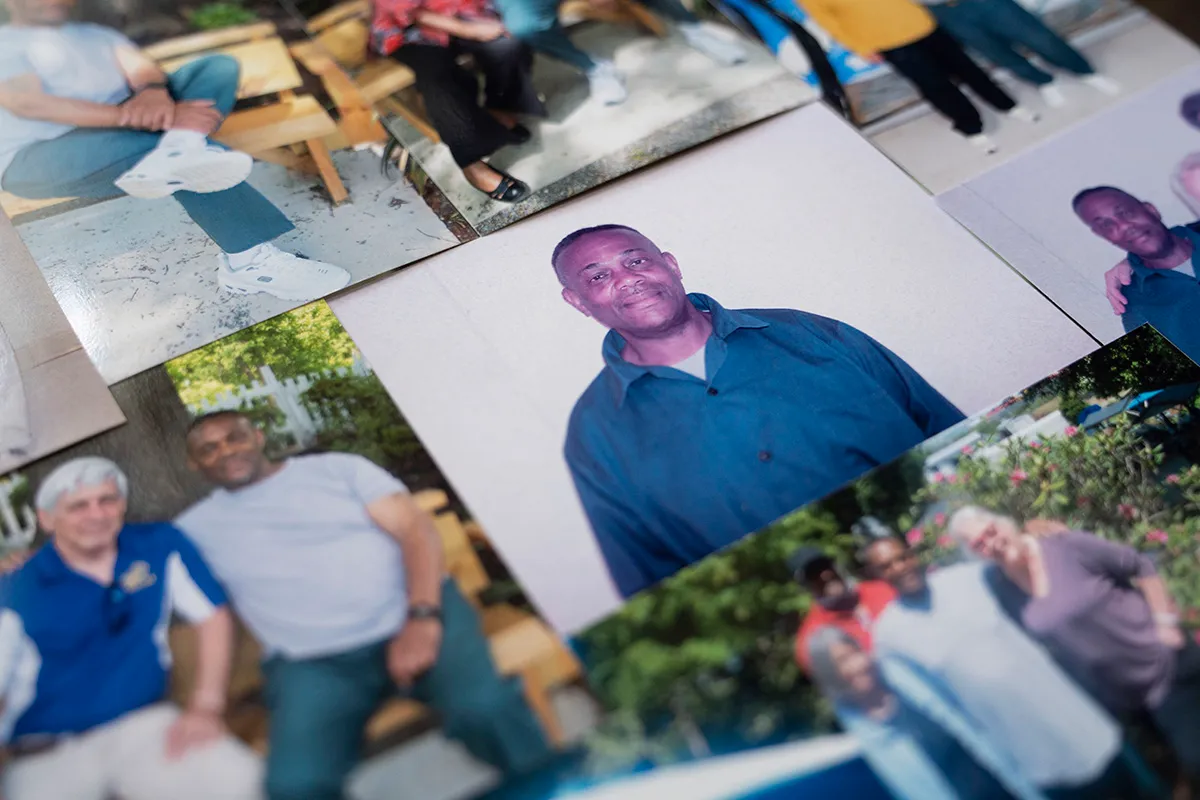
Charles McNeair visiting with family and advocates at various correctional facilities in North Carolina. (Julia Wall for The Assembly) |
|
|
|
Last week, Charles McNeair was released after spending 46 years in prison. McNeair, who is Black, was arrested in Lexington at age 16, charged with raping a white woman. He has always maintained his innocence.
Three years ago, The Assembly’s Michael Hewlett, published a deep dive into the decades old case and raised many questions about how it was handled by law enforcement and McNeair’s own attorney. Hewlett also brought in context about what life was like in Lexington in 1979, where the Ku Klux Klan was active and the late Davidson County District Attorney Butch Zimmerman was known for racism. Hewlett looked into McNeair’s 28 parole requests, each one denied by the N.C. Post-Release Supervision and Parole Commission. And he spoke with McNeair, his family members and those involved in the growing and multiracial movement of community members who’ve spent years researching the case and calling for McNeair’s release.
Hewlett’s follow up story on McNeair’s 30th and ultimately successful parole request continues to ask critical questions about avenues to challenge wrongful convictions, the systems for parole and clemency and the road ahead for McNeair who spent his entire adult life in prison.
Michael took some time this week to provide insights into his reporting and what he might look into next.
What did your reporting reveal that raised questions about the evidence in the Charles McNeair case?
Michael Hewlett: I was stunned by the sheer lack of documentation in the case. I tried to piece together the steps Lexington police detectives took in investigating this alleged rape, but it was difficult because the criminal investigative file was missing. When I interviewed Charles McNeair, more questions arose, including that his attorney told him a falsehood: that he could face the death penalty if convicted of first-degree rape at trial. That wasn't true, but McNeair didn't know that and so he took a plea that resulted in a life sentence.
Without the investigative file, what other records or primary sources did you use to report this story?
Michael Hewlett: I relied on court records, archived news articles and documents that advocate Wanda Cox had collected over the years, including rejection letters McNeair received from the parole board. I interviewed Charles McNeair at least three different times by phone and spoke with some of his family members.
Two things were important to me in writing the story---talking to Charles McNeair and obtaining any official records to help piece together what happened.
After 46 years in prison, McNeair was finally granted parole last month and has been released. What did you want to make sure to convey in your follow-up story?
Michael Hewlett: I wanted to remind readers that Charles McNeair was just a kid when he was first locked up. He's now 63. Having covered other alleged wrongful convictions, I know Charles McNeair has a long road ahead.
Are there any threads you'll continue to follow that might help raise more awareness about continuing racial inequities in sentencing, the North Carolina Juvenile Sentence Review Board and/or Parole Commission?
Michael Hewlett: My immediate plan is to meet with Charles McNeair soon to write about how he is acclimating back into the real world. Remaining questions also exist regarding what happened with other pending clemency petitions filed under the now-expired Juvenile Sentence Review Board. It's unclear whether Gov. Josh Stein will issue a similar executive order re-establishing the board.
Anything else to add?
Michael Hewlett: Writing and reporting about the Charles McNeair case offered me many lessons about both the power and the failures of journalism. One of the first things I did when researching this case was reading through the news coverage, it immediately became clear that reporters at the time just didn't ask basic questions. It was almost as if they presumed Charles McNeair guilty, even as the Lexington Police Department linked him to four other assaults on white women with hardly any evidence. It reminds me that having a diverse newsroom is absolutely vital because diverse newsrooms can produce better and more impactful journalism.
Read Michael’s reporting:
➡️ A Black Teen. A White Woman. A Life Sentence.
➡️ Charles McNeair Spent His Adult Life in Prison. At 63, He’ll Go Home.
Thank you Michael for chatting with us and all your vital work covering this story thoroughly, thoughtfully and with care.
|
|
|
|
|
New team member joins NC Local/Open Campus to expand community college reporting |
 |
|
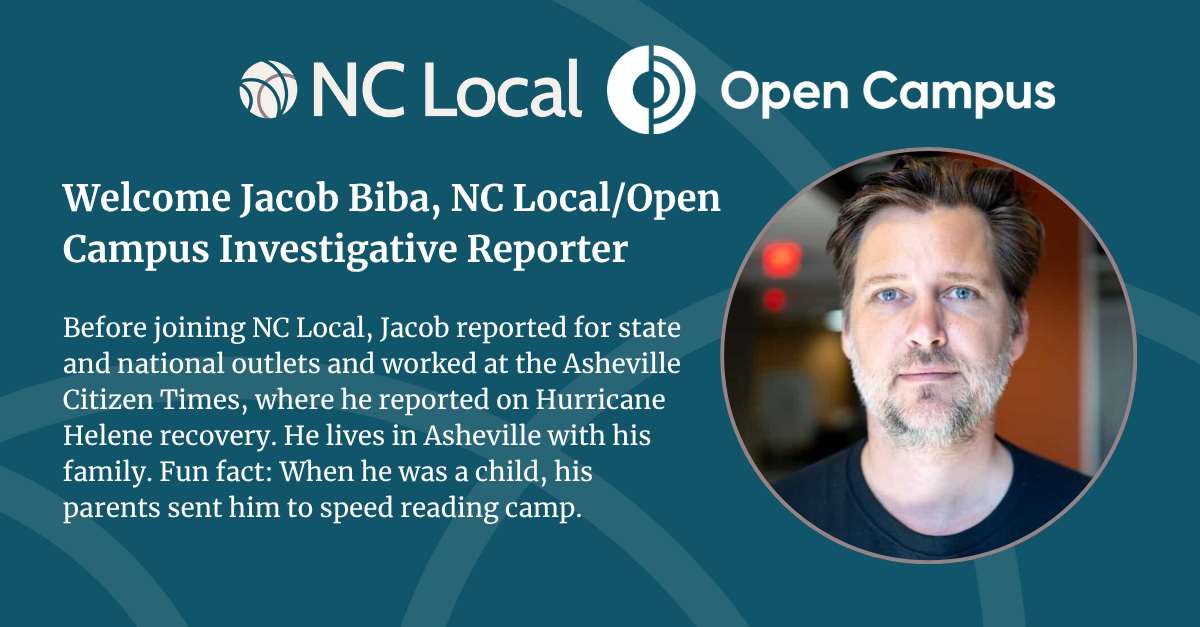
We are pleased to announce that Jacob Biba is stepping into the role of NC Local/Open Campus Investigative Reporter. NC Local is one of three newsrooms partnering with Open Campus to launch a new community college accountability initiative.
Community colleges enroll millions of students and play a major role in local economies but operate with little public scrutiny. In North Carolina, 58 community colleges serve more than 600,000 North Carolinians. The new initiative aims to help communities better understand and influence these institutions and the educational, economic, civic, and workforce development roles they play.
“Jacob brings a wealth of experience and knowledge to the role, and we are excited to see the deep investigative work he produces through this partnership,” said NC Editorial Director Laura Lee.
Jacob has been a regular freelance contributor to NC Local since last Fall. He’s looked at why health care costs are increasing, followed ICE arrests and detention facilities and filed multiple public records requests with federal agencies to understand the full extent of arrests and detentions across the state. He also recently examined the impact of the freeze passed by the General Assembly on the Lawyers’ Trust Accounts program.
“I'm most looking forward to covering a topic that is often overlooked but has such an influence on so many people's lives in North Carolina,” said Jacob.
Previously, Jacob worked for the Asheville Citizen Times, where he did accountability reporting and covered Helene and the disaster’s aftermath. Jacob lives in Asheville with his family and starts with NC Local/Open Campus on Monday. You can reach Jacob at jacob@nclocal.org.
Please help us welcome Jacob into his new role!
|
|
|
|
|
👏 Well Done 👏 |
|
👏 Bravo to my colleague Diara J. Townes, who spent nine months investigating a controversial data center in Person County for this new piece in The Assembly: The Data Center That Didn’t Exist. Diara digs into a very secretive $27 million deal between county officials and Microsoft to purchase 1,350 acres of “fields, forest, and creeks.” By the time information on the deal was made public, Diara writes “the land had been sold, a key road had been closed, and Duke Energy was already in the permitting process for a new gas plant to power it all.” Even commissioners weren’t fully briefed on the deal until after it was signed.
Person County tried to withdraw a responsive public records request on correspondence about the deal, but failed to cite a specific statutory exemption. The Assembly had already downloaded the file. Officials denied another request for water service agreements, capacity studies, communications related to the site, and NDAs.
The investigation, supported by the Environmental and Epistemic Justice Initiative at Wake Forest University, also looks at a decade of efforts by local officials to sell this parcel of land, near the Virginia border, to various heavy industries and how they quietly and quickly moved the Microsoft deal along. Diara also digs into the environmental impacts of the massive energy and water usage needed to fuel these megasites.
👏 For Grist & BPR, Katie Myers has a deeply reported series on the impact of climate disasters on people in recovery. In Hurricane Helene shattered lives — and the systems that keep people sober, Katie looks at how disasters can upend the treatment programs, transportation and social networks that are essential to maintaining sobriety, especially in rural regions.
In Part 2, Helene frayed the safety net for people who use drugs. The community wove it back together, published in partnership with The Assembly, Katie looks at both the shortcomings and solutions to supporting people in recovery during climate disasters. The piece highlights that those leading grassroots recovery organizations and peer-led initiatives already had a foundation of care and mutual aid in place that they were able to deploy in Helene’s aftermath, but also faced many systemic barriers in getting resources and keeping people safe.
✅ Both of Katie’s pieces are available for republication.
Help us recognize the important work being done across the NC news and information ecosystem. Send us “Well Done” nominations for any beat by replying to this email or emailing us at catherine@nclocal.org. |
|
|
|
|
|
Bulletin Board |
Jobs |
|
📌 Executive Director, NC Health News (Remote in NC) 💰
📌 Executive Editor, Restoration Media, Wilson
📌 Reporter, The Sanford Herald, Sanford
📌 Staff Writer, Smoky Mountain News, Waynesville
📌 Public Programming Director, The Assembly (Remote in NC, Triangle preferred)
📌 Deputy Director, Audience and Growth, The Assembly (Remote in NC, Triangle preferred)
📌 Local Government Reporter, INDY/The Assembly, Durham 💰
📌 Reporter/multimedia journalist, The Enterprise, Spring Hope
📌 Freelance Bilingual Journalist, Enlace Latino NC, Jackson and Macon Counties 💰
📌 Freelance Bilingual Journalist, Enlace Latino NC, Burke County 💰
📌 Senior Business Operations Manager, News Revenue Hub (Remote) 💰
📌 Executive Director, Education Writers Association (Remote) 💰
📌 Deputy Managing Editor & Senior Editor, Local and Engagement, The Marshall Project (Remote) 💰
|
Opportunities & events |
|
🌱 Civic Partnerships Playbook: Created by El Tímpano and Ariel Zirulnick, this free guide is designed for local newsrooms seeking new revenue strategies, particularly those serving immigrant and low-income communities. El Tímpano generates about $350,000 in annual revenue through these partnerships, spanning public health departments, school districts, transit agencies and nonprofits. Use the playbook to understand what this model is, if it’s right for you and how to ensure transparency and editorial independence.
📅 Building your disaster toolkit: Join City Bureau and Grist for a workshop series to learn about extreme weather events, how to plan for them, and ways you can streamline and share information in an emergency. Participants will adapt Grist’s Disaster 101 toolkit — a comprehensive guide about prep, response and recovery — to their local contexts and practice using it for other crisis situations as well, such as ICE raids or pollution events.
Sessions include:
-
The Basics of Extreme Weather: Tuesday, May 19 from 5:00 - 6:30 P.M. CT (RSVP here!)
-
Preparing Your Toolkit: Tuesday, July 7 from 5:00 - 6:30 P.M. CT
-
Creating a Plan with Your Community: Tuesday, September 22 from 5:00 - 6:30 P.M. CT
-
Sharing With Neighbors & Applying the Toolkit to Other Crises: Tuesday, November 10 from 5:00 - 6:30 P.M. CT
Grist’s Disaster 101 Toolkit offers comprehensive information on disaster preparation, response, and recovery, as well as specific guides on housing, food access, and public health, guides for undocumented immigrants, and more. It’s available for republication and adaptation.
📅 The Role of Information Systems and How They Create Healthy Communities: As part of the launch of the latest iteration of the Civic Information Index, an interactive database mapping civic information and health in every county in America across 27 indicators, collaborators from Brown University’s Information Futures Lab and Listening Post Collective will demonstrate how news and information access intersects with equity and justice, civic participation, health and opportunity, and environmental resilience. May 13, 1:00 pm.
📅 Find your people: Engagement strategies for bringing solutions reporting to the community. There's often a gap between the people we reach with our stories and those who would most benefit from a solution. In the second of a two-part series by Solutions Journalism Network and Advancing Democracy, Crosswinds News and Texas Standard discuss building on prior solutions journalism training to deepen engagement on Native inclusion and adult education beats. You'll leave with real-world examples and the start of your own engagement idea — with guidance. May 21, 1:00 pm.
📅 How to grow your small donors -- RJI Community Conversation: Join Innovation Team Project Manager Sriya Reddy in conversation with Kimberly Griffin and Penny Riordan to talk about small dollar donors and best practices to grow them. Kimberly Griffin helps nonprofit newsrooms close the gap between strategy and results. Penny Riordan is an audience, product, and technology leader with more than 20 years of experience working for and with local media organizations. May 21, 3:00 pm.
📝 How are you using AI to drive revenue? Publishers, ad managers, development leads & business-side professionals in local media: the Center for Innovation & Sustainability in Local Media is studying how AI tools are being used to support business development functions in news organizations. CISLM is gathering real use cases across revenue, operations, and audience strategy in order to help facilitate better AI-related programming and research for local news leaders. All responses are confidential and will be reported in aggregate. Access the survey here. |
|
|
|
|
That's it for this week. Thank you for reading, amplifying each other's work and as always know you are appreciated for all you contribute to the NC news and information ecosystem! —Catherine |
|
|
|
|
|
|